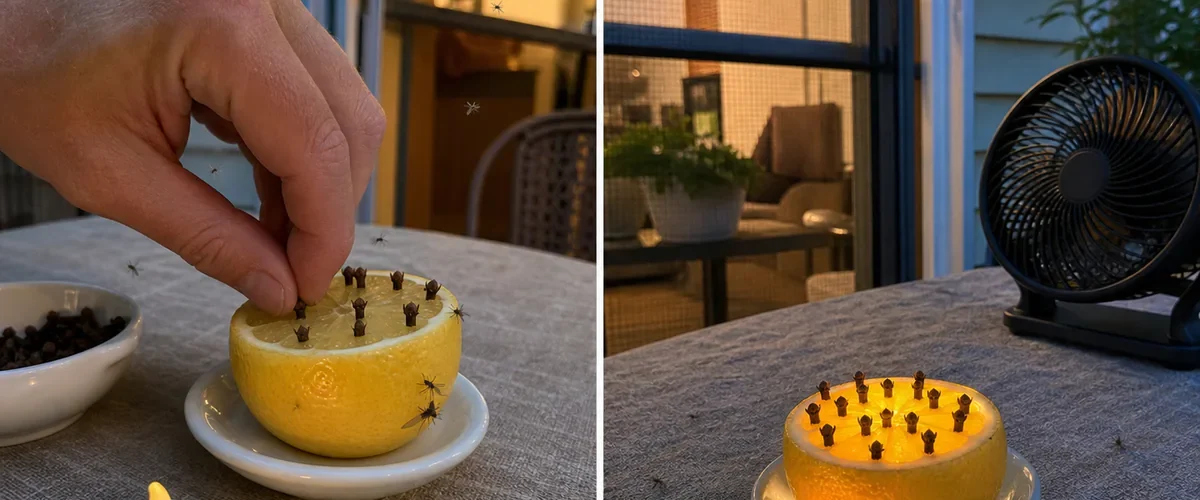
A lemon covered with cloves looks beautiful on a summer table. Add a small candle, and the warm citrus-spice scent can fill the room. The setup feels like the secret answer to a noisy mosquito circling the guests. But pleasant perfume and proven bite protection are not the same thing.
A lemon and clove mosquito remedy may add fragrance, yet it cannot promise that mosquitoes will never return. The safer way to enjoy the idea is to treat it as decoration while proven prevention handles the insects.
What the Viral Lemon Lantern Contains
The popular design pushes whole cloves into two lemon halves. A small candle sits in the center, sometimes surrounded by bamboo sticks or capped with another slice of lemon. Heat releases aroma from the fruit and spice.
Clove contains aromatic compounds, and citrus peel carries fragrant oils. Those facts do not prove that a homemade concentration protects an entire room or prevents disease. Airflow, mosquito species, distance, and the amount released all change the result.
The Candle Creates a Bigger Question Than the Scent
Never place an open flame inside an unstable fruit half. As the lemon dries and softens, the candle can lean. Bamboo, curtains, napkins, dried flowers, and mosquito nets can catch fire.
If you want the look, use a flameless LED tea light. Set the lemon on a washable plate away from children and pets, and discard it when it becomes soft or moldy. The scent will be gentler, but the fire risk disappears.
Why Mosquitoes Keep Returning
Female mosquitoes find people through a mix of carbon dioxide, body heat, movement, and skin odors. A bowl of lemon and cloves does not remove those signals. It also does not stop larvae growing in a flowerpot saucer outside the door.
Some mosquitoes bite mainly around dusk, while others bite during the day. If one disappears after the lantern is placed, it may have landed elsewhere. That single observation cannot measure protection.
The Weekly Habit That Shrinks the Next Generation
Once a week, inspect indoors and outdoors for standing water. Empty, scrub, turn over, cover, or remove containers such as buckets, toys, plant saucers, birdbaths, pool covers, and open trash cans. Clear gutters and keep rain barrels tightly covered.
For water that cannot be emptied and is not used for drinking, an EPA-registered larvicide may be appropriate when the label allows it. Follow the exact directions. More product is not better.
Block the Mosquito Before It Reaches the Table
- Repair holes in window and door screens.
- Close doors promptly and check gaps around frames.
- Use air conditioning where available.
- Run an outdoor fan across a seating area; moving air can make landing difficult.
- Use a mosquito net when sleeping without screened protection.
Keep every net away from candles, cigarettes, and open flames. A scented centerpiece should never sit beside fabric protection.
Use Repellent That Has Been Tested
The CDC recommends an EPA-registered skin repellent with an approved active ingredient, such as DEET, picaridin, IR3535, oil of lemon eucalyptus or PMD, or 2-undecanone. Read the label for age limits, application, and reapplication.
Oil of lemon eucalyptus is a formulated repellent ingredient. It is not the same as lemon juice, lemon essential oil, or a clove-studded fruit. The CDC does not recommend unregistered natural repellents when protection from mosquito-borne illness matters because their effectiveness is uncertain.
Be Careful With Homemade Oils
Do not rub clove oil or citrus essential oil directly on skin. Concentrated oils can irritate or sensitize skin, and some citrus oils react with sunlight. They can also be dangerous to pets. A recipe described as natural still needs safety and dose information.
Likewise, do not spray vinegar, essential oils, or perfume around eyes, food, aquariums, or animals. Use only a product labeled for the place and purpose.
Make the Centerpiece Without Creating a Pest Snack
Build the decoration shortly before guests arrive rather than leaving cut fruit on the table for days. Keep the plate away from open food, wipe up juice, and refrigerate unused lemon. At the end of the evening, seal the softened fruit in the trash or compost it in a managed outdoor system.
This matters because a fading lemon may attract fruit flies even while it is supposed to repel another insect. A clean, fresh display with a flameless light gives you the scent and warm glow without turning yesterday’s centerpiece into tomorrow’s kitchen problem.
When Mosquitoes Signal a Larger Problem
Heavy numbers may come from a hidden drain, neglected container, nearby property, or community breeding area. Contact a local mosquito-control program or pest professional for persistent activity. Seek medical advice after a bite if concerning fever, severe headache, weakness, rash, or other unusual symptoms develop.
The fragrant lemon lantern can still be a charming table decoration when made without a real flame. Let it perfume the evening, not carry the safety promise. Screens, dry containers, labeled repellents, and local control are what keep the mosquitoes from owning the night.