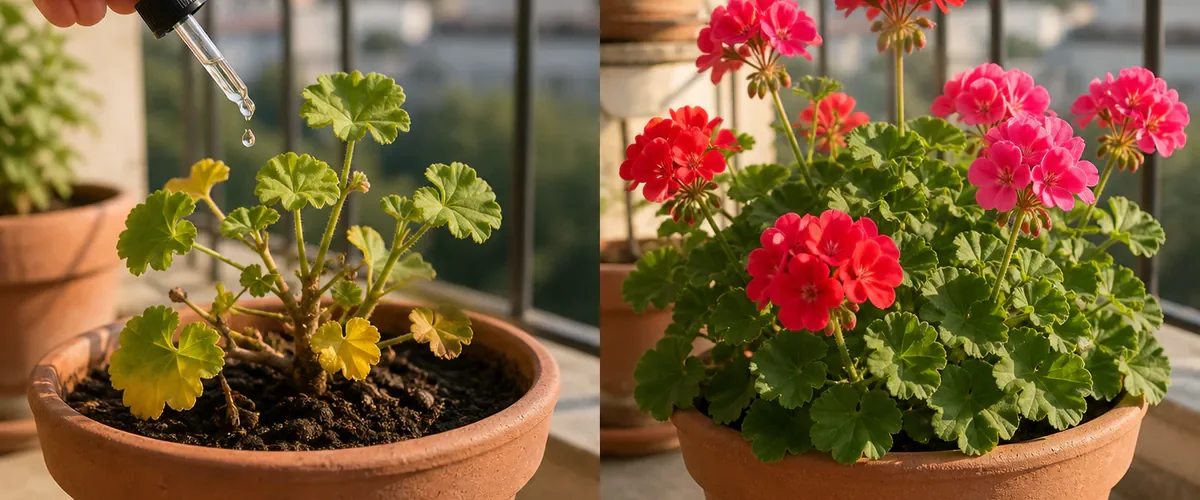
Three drops of castor oil and half a teaspoon of hydrogen peroxide are stirred into a liter of water. The mixture is poured over a quiet geranium with the promise that the balcony will soon explode with color. The recipe is precise enough to feel scientific, but precision does not prove that roots need it.
For faster geranium blooms, sunlight, drainage, moisture, feeding, and deadheading have far stronger support. Castor oil can coat soil and interfere with water movement, while hydrogen peroxide can injure living tissue at the wrong concentration.
Skip the Drops and Start With the Sun
Annual geraniums, or Pelargonium, bloom best in a sunny place. The University of Minnesota recommends full sun, with less light leading to fewer flowers. Move a shaded plant gradually so its leaves adjust without scorching.
Some specialty geraniums have different needs. Martha Washington types often respond to cooler nights, while scented types are grown as much for their leaves as their flowers. Identify the plant before diagnosing slow bloom.
Make Sure Water Can Leave the Pot
A container needs open drainage holes and a loose potting mix. Geranium roots tolerate some dryness better than constant wetness. If the pot sits inside a decorative cover, empty collected water after every soaking.
Water when the top 1 to 2 inches of mix feels dry. Soak the root ball until water drains, then wait and check again. Tiny daily splashes create shallow wet zones and make care difficult to judge.
Use a Pot That Matches the Roots
A root-bound geranium dries too quickly and may stop growing. A huge pot stays wet for too long. Slide the plant out gently and inspect. If roots form a dense circle with little mix visible, move up one container size and keep the stem at its former depth.
Do not repot during severe heat or while the plant is badly wilted. Water it appropriately first and provide a few days of protection after the move.
Feed the Flowers Without Feeding Only Leaves
Garden geraniums often need little fertilizer when soil tests show adequate nutrients. Container plants need more regular feeding because watering carries nutrients away. Use a balanced fertilizer labeled for flowering annuals and follow its rate.
Too much nitrogen creates soft green growth with fewer flowers. White crust, burned edges, and wilting despite damp soil can signal fertilizer salts. Flush the pot with plain water and reduce feeding rather than adding another homemade solution.
Deadheading Sends a Clearer Signal
Follow a faded flower cluster down to its stem and remove it cleanly near the main plant. This prevents energy from moving into seed production and keeps dead tissue from collecting moisture.
Remove yellow or diseased leaves with clean fingers or scissors. Never strip healthy foliage; leaves power the next group of buds. Wash tools between plants when disease is suspected.
Why Castor Oil Does Not Belong in the Root Zone
Castor oil is not a complete fertilizer. Oil poured into potting mix can create water-repelling patches, collect residue, and make oxygen movement less predictable. A few drops may appear harmless, but there is no label showing a proven plant dose or frequency.
Do not use castor beans or homemade castor preparations. The plant material can contain ricin and presents a serious risk to people and animals. Keep garden products in their original containers and away from children and pets.
Hydrogen Peroxide Is Not Weekly Flower Food
Household hydrogen peroxide is an oxidizer, not balanced nutrition. Concentration, stabilizers, contact, and root condition affect the result. Repeated applications can harm beneficial organisms or tender roots. It should not be part of a routine geranium watering can without specific professional guidance.
Give a Tired Plant Time to Respond
After correcting light, drainage, or feeding, wait for new growth before making another major change. Leaves already damaged by stress will not turn perfect again, but healthy new leaves and firm buds show that the roots are recovering.
Change one condition at a time and take a weekly photo. If you repot, fertilize, prune, and move the plant on the same afternoon, you will not know what helped or what caused fresh stress. Steady care usually outperforms a dramatic rescue routine.
Check These Problems When Buds Never Form
- Too little sun: long gaps appear between leaves and flowering slows.
- Wet roots: lower leaves yellow and stems may soften.
- Heat stress: flowers fade quickly and the pot dries within hours.
- Overfeeding: foliage grows rapidly while buds remain scarce.
- Pests: mites, aphids, whiteflies, or budworms damage new growth.
- Old flowers: clusters remain attached and begin setting seed.
Inspect twice a week, especially beneath leaves and inside buds. Use a control labeled for the identified pest rather than spraying a mystery mixture on every plant.
Three tiny drops make a dramatic promise, but the balcony fills with geranium flowers when the basics align. Give the plant strong light, a draining pot, measured feeding, sensible dry cycles, and regular deadheading. Those changes are less mysterious and far more dependable.