Grandma’s zucchini pot looked far too small to produce so much. Every few days, another glossy fruit appeared beneath the leaves. Neighbors asked what fertilizer she used, but her real trick was a rhythm: enough root room, flowers pollinated in the morning, and fruit picked before it became a club.
A high-yield potted zucchini cannot be guaranteed to triple in weeks, yet the right timing can transform production. Choose a compact variety, give one plant a large draining container, protect pollinators, and harvest often.
Begin With a Variety That Fits a Pot
Look for a compact or bush summer-squash variety recommended for containers. Vining types can overwhelm a small balcony. Read the seed packet for mature spread and days to harvest, then count backward from the first expected frost.
Zucchini needs warm soil and does not tolerate frost. Sow outside only after local conditions are suitable, or start seed indoors according to regional guidance without allowing seedlings to become root-bound.
One Plant Needs More Root Space Than It Appears
Use a large container, commonly around 20 to 25 gallons for one plant, with multiple open drainage holes. Exact needs vary by variety and climate. A small pot overheats, dries rapidly, and holds too little nutrition for a heavy crop.
Fill it with fresh, high-quality container mix rather than dense garden soil. Mix in finished compost at an appropriate proportion. Leave watering space at the rim and raise the pot so holes remain free.
Do Not Keep Three Seedlings Competing
Sow two or three seeds only as insurance. Once true leaves appear, keep the strongest seedling and snip the others at soil level. Pulling them can disturb the chosen plant’s young roots.
One vigorous zucchini can fill the container. Crowding several plants reduces airflow and makes water, nutrients, and light more difficult to manage.
Sun Powers the Harvest Promise
Place the container where it receives at least six to eight hours of direct sun, unless extreme local heat calls for afternoon protection. Watch how buildings and railings move shade across the balcony.
Rotate the pot only if it can be moved safely. A full container is heavy; place it correctly before planting and use a stable wheeled base rated for the weight if necessary.
Water the Root Ball, Not the Calendar
Check moisture daily in hot weather. Water deeply until excess leaves the holes, then wait until the upper mix begins to dry. A saucer should not remain full, and the crown should not sit wet.
Repeated drought can cause wilt and misshapen fruit. Constant saturation suffocates roots. Mulch lightly with a clean material while keeping it away from the stem.
The Morning Pollination Trick Saves Tiny Fruit
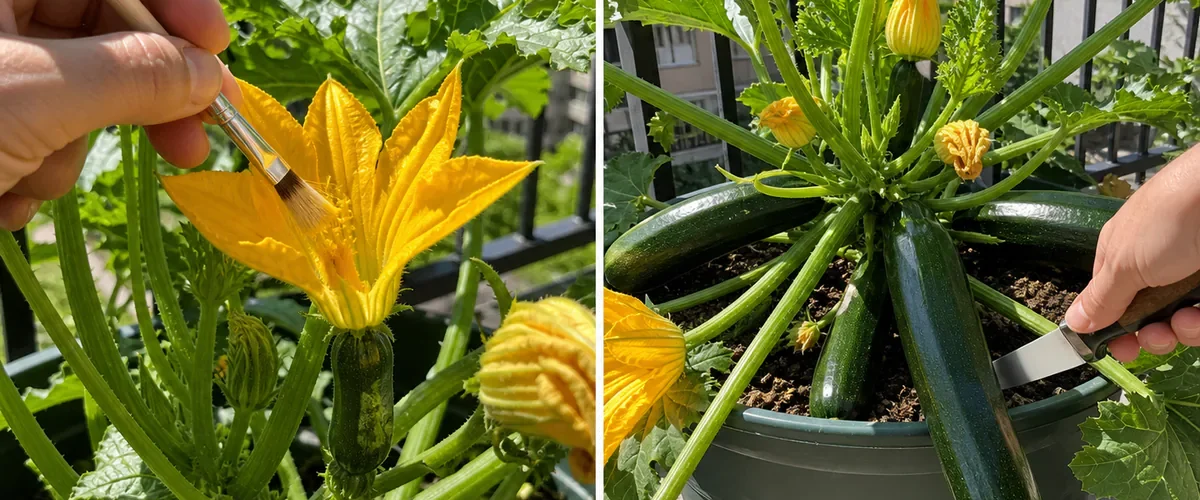
Male and female flowers are separate. A female flower has a miniature zucchini behind it. Without enough pollen, that fruit yellows and collapses, which many gardeners mistake for fertilizer failure.
Let bees work and avoid spraying open flowers. If pollinators are scarce, use a clean soft brush in the morning to move pollen from a fresh male flower onto the center of a fresh female flower.
Feed a Container in Measured Doses
Container nutrients wash out with drainage. Use a complete fertilizer labeled for edible vegetables at the stated pot rate. Too much nitrogen makes broad leaves while delaying flowers and can burn roots.
Yellow leaves do not always mean hunger. Check moisture, root space, pests, and disease before adding another dose.
Prune Only What the Plant Can Spare
Remove dead, badly diseased, or soil-damaged leaves with clean pruners. Do not strip healthy large leaves merely to “send energy” to fruit. Those leaves create the sugars that grow the crop and shade developing zucchini from sun injury.
Improve airflow by supporting leaves gently and spacing nearby pots. Clean tools after cutting diseased tissue.
Harvest Before the Plant Slows Down
Pick zucchini at the useful size for the variety, often while the skin is tender and the seeds are small. Check beneath leaves every day or two. A hidden fruit can grow surprisingly fast.
Cut the stem with a clean knife rather than twisting the plant. Frequent harvest encourages continued flowering, while oversized fruit uses more of the plant’s energy.
Watch for the First Warning Signs
- White powder spreading on leaves may be powdery mildew.
- Holes near the stem base can indicate squash vine borer in affected regions.
- Clusters of eggs or wilting can point to squash bugs.
- Yellowing tiny fruit often signals poor pollination.
- Daily collapse in wet soil can mean root trouble, not thirst.
Grandma’s trick was not a secret powder. It was timing every ordinary job before the plant paid a price: a large pot before roots cramped, pollen before the female flower closed, water before severe wilt, and harvest before fruit became oversized. That rhythm is how one potted zucchini can keep surprising the balcony.