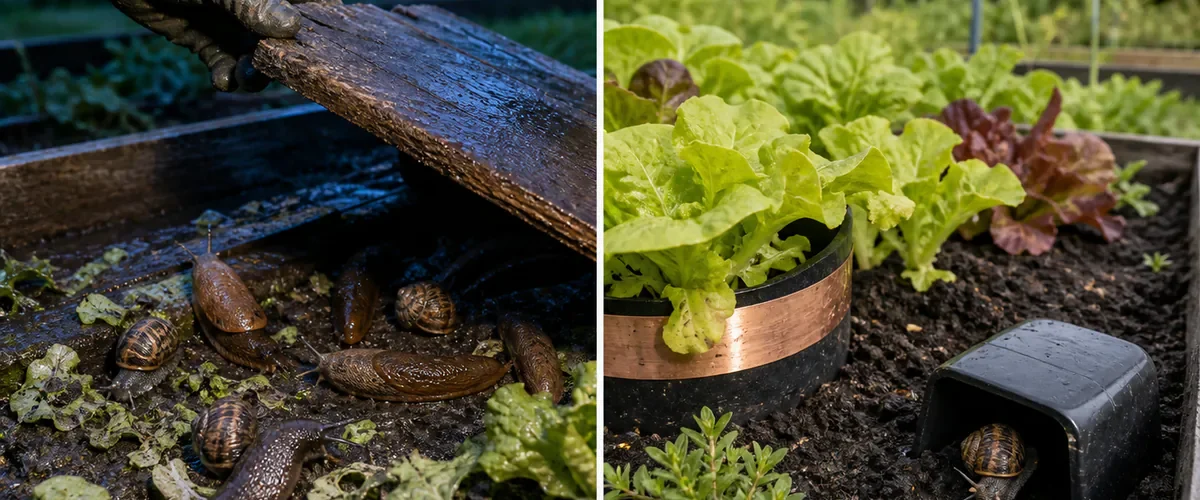
By sunset, the lettuce looked perfect. At sunrise, half the leaves were lace and a silver trail crossed the soil. Snails and slugs had done their work while the garden slept, then disappeared into the cool shade before anyone arrived.
To keep snails out of the garden, combine six practical controls: make the area drier, remove hiding places, hand-pick, trap and monitor, protect small zones with copper, and use a labeled lower-toxicity bait only when needed. No eggshell ring can replace that layered plan.
1. Make the Surface Less Comfortable
Snails and slugs thrive in damp, shaded places. Water in the morning so the soil surface can dry before night. Improve drainage, thin dense plants for air movement, and lift low leaves away from the ground.
Keep mulch a little back from tender seedlings and avoid thick wet piles. Do not dry the crop itself; give roots the moisture they need while reducing the cool wet pathways pests use after dark.
2. Remove Their Daytime Hotels
Move unused boards, overturned pots, weeds, stones, and damp debris near valuable plants. Inspect the undersides before relocating them. Compost piles and ground covers can shelter snails, so position them thoughtfully.
Some shelter supports beneficial insects and wildlife. The goal is not a bare yard. Concentrate cleanup around vulnerable seedlings and beds showing fresh slime trails.
3. Hand-Pick When Activity Is Highest
Search with a flashlight after dusk or early on a damp morning. Wear gloves and inspect beneath leaves, rims, boards, and containers. Place collected snails in a secure container and follow local guidance for humane disposal or relocation; moving invasive species may be restricted.
Repeat for several nights. One pass removes visible adults, while smaller pests and eggs remain hidden. Keep a count to learn whether the population is falling.
4. Use Shelter Traps as Monitoring Stations
Lay a damp board, upturned grapefruit rind, or similar shelter on the soil overnight. Snails may gather beneath it by morning, making collection easier. Check daily so the trap does not become a permanent breeding shelter.
Beer traps can catch slugs but also drown them, require frequent cleaning, and may attract pests from nearby. Sink the rim properly, place it away from children and pets, and do not rely on one container for a large garden.
5. Protect Containers With a Wide Copper Barrier
Copper can deter slugs and snails when they contact a band wide enough for the whole body. It is most practical around pots or small raised beds. Clean the copper as it weathers and ensure no leaves bridge over it.
Check that no pests are already trapped inside the protected area. Fold or cover sharp edges, especially where children reach. A narrow decorative strip may not provide enough contact to work.
6. Choose Bait Carefully When Damage Continues
Iron phosphate baits are generally less hazardous around children and pets than metaldehyde, but every pesticide still requires label care. Apply only to listed sites and crops, observe harvest intervals, and store the package securely.
Metaldehyde is highly toxic to dogs and other animals. Avoid it where pets can enter. Never make a pile of bait; follow the scatter rate on the label.
Why Eggshells and Coffee Grounds Disappoint
Eggshell barriers often develop gaps, flatten, or become wet. Snails can cross them, and sharp fragments can create handling problems. Shells add calcium very slowly and should not be treated as quick fertilizer.
Coffee grounds lose texture when wet and can change soil conditions when applied heavily. Caffeine can affect plants and other organisms. Add ordinary amounts to a managed compost system instead of building thick rings around stems.
Paper Collars Are Not Built for Wet Nights
A toilet-paper collar softens in rain and can trap moisture against a stem. Snails also reach plants from touching leaves, stakes, walls, and nearby pots. Use a durable seedling guard designed for the crop, then inspect it often.
Confirm the Culprit Before Treating
Snail and slug feeding leaves irregular holes and smooth-edged damage, often with slime trails. Earwigs, caterpillars, beetles, and mammals can create different injury. Inspect at night and photograph the pest before applying bait.
Encourage ground beetles, birds, toads, and other natural enemies where appropriate. Broad pesticide use can remove these allies and leave the garden more dependent on treatment.
Measure Damage, Not Just Snail Numbers
Mark three affected plants and photograph them every few mornings. New holes, clipped seedlings, and fresh slime trails show active pressure. Old damage remains visible after control works, so counting every torn edge can make a successful plan look like a failure.
Protect young transplants first. An established plant can lose a small amount of leaf tissue without needing bait across the entire yard.
The quickest improvement rarely comes from one sharp barrier. It comes from changing the wet night environment and checking the same hiding places repeatedly. Layer all six controls, protect only the crops under pressure, and the morning leaves have a much better chance of staying whole.