The zucchini leaves grew wide enough to hide the path, but the harvest remained painfully small. Then four “miracle” feeds appeared online: manure, iodine, wood ash, and sweet yeast water. Each promised more fruit. Only some matched what the soil and plant could actually use.
For a bigger zucchini harvest, start with a soil test, compost, steady water, and a measured fertilizer plan. Of the four viral feeds, properly composted manure and carefully chosen fertilizer can help. Iodine and sugar-heavy yeast water are not reliable zucchini nutrition, while wood ash is useful only in the right soil.
Feed the Soil Before the First Seed
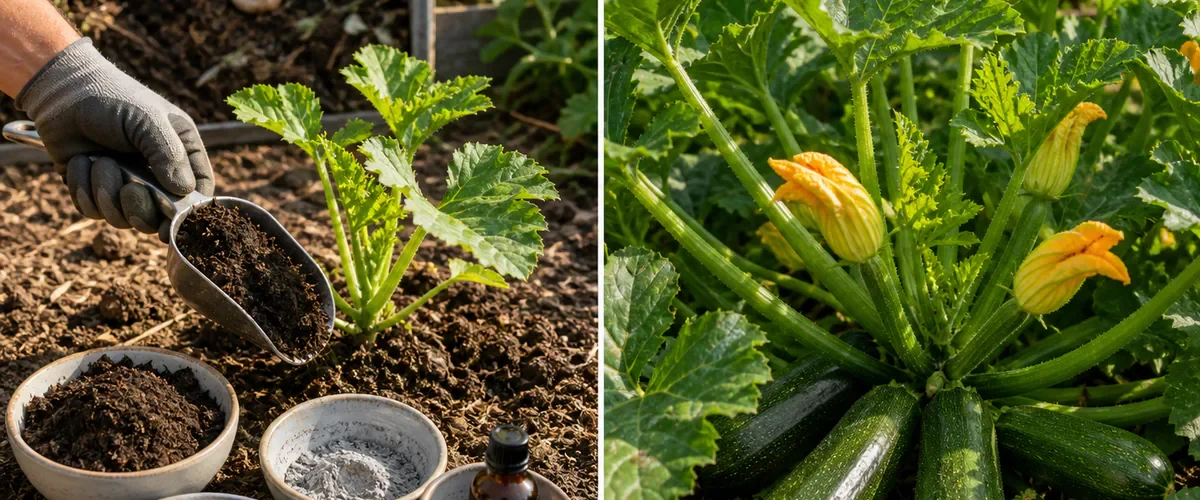
Zucchini is a fast-growing summer squash. It needs full sun, warm soil, room for large leaves, and consistent moisture. Before planting, mix finished compost into the bed according to local extension guidance. Compost improves soil structure and supplies nutrients slowly.
A laboratory or extension soil test shows pH and nutrient levels. Without it, a gardener may add potassium to soil that already has plenty or raise pH until other nutrients become harder to use.
Feed 1: Compost and Aged Manure Can Help
Well-composted manure can add organic matter and nutrients before planting. Fresh manure is different. It may burn roots, carry pathogens, smell strongly, and encourage excessive leafy growth. Food-safety rules also limit how close raw manure can be applied before harvesting an edible crop.
Use a finished, trusted product and follow its directions. Do not pour fresh poultry or livestock manure tea around a producing zucchini plant. More nitrogen can create a huge green canopy without correcting poor pollination or a potassium shortage.
Feed 2: Iodine Is Not a Complete Fertilizer
The viral recipe adds dozens of iodine drops to a bucket of water. Plants need nitrogen, phosphorus, potassium, and other nutrients in known amounts. Household iodine does not provide that balance and may injure roots or soil organisms at an unsuitable concentration.
A recipe that counts drops cannot account for product strength, soil volume, rainfall, or existing nutrients. Skip the iodine and use a fertilizer labeled for vegetables when a test or growth stage shows feeding is needed.
Feed 3: Wood Ash Is Powerful, Not Gentle
Clean wood ash contains potassium and calcium, but it also raises soil pH and adds soluble salts. That may help a tested acidic soil that needs potassium. It can harm an alkaline garden or a bed already rich in nutrients.
Never use ash from painted, treated, glued, or manufactured wood. Do not apply ash to foliage or mix it with nitrogen fertilizers. Ask a local extension service for a test-based rate, wear protection from dust, and keep it out of waterways.
Feed 4: Yeast and Sugar Do Not Replace Plant Food
Yeast water foams and smells active, which makes it look powerful. Sugar feeds microorganisms, but the mixture does not deliver a predictable fertilizer analysis. It can attract ants, flies, and other pests while changing microbial activity around roots.
Fermentation also varies with temperature, time, and ingredients. A sweet bucket left in sun is not a controlled plant product. Add suitable organic matter to compost instead and keep sugary drinks out of the vegetable bed.
A Measured Side-Dressing Is Easier to Repeat
Extension recommendations often call for a measured nitrogen side-dressing as summer squash begins to spread. The correct product and amount depend on the soil test, row length, and fertilizer analysis. Keep granules away from stems and leaves, then water them into the root zone.
For containers, use a complete fertilizer labeled for edible vegetables and follow the pot rate. Nutrients wash out through drainage, but overfeeding can burn confined roots quickly.
Write the product, dose, and date on a garden note. Wait for the plant’s response before adding anything else. A record prevents accidental double-feeding and helps separate a true nutrient response from warmer weather, better pollination, or more consistent watering.
Nutrition Cannot Fix Missing Pollination
A zucchini plant makes separate male and female flowers. The female has a tiny fruit behind the bloom. If pollinators do not transfer enough pollen, that fruit may yellow and rot from the blossom end.
Protect bees by avoiding insecticide on open flowers. If pollination is poor, transfer pollen from a freshly opened male flower to a female flower with a clean soft brush in the morning.
Water and Harvest Like the Plant Is Producing
- Water deeply at soil level rather than wetting leaves repeatedly.
- Keep moisture steady during flowering and fruit growth.
- Use clean mulch without piling it against the stem.
- Harvest medium zucchini often with a clean knife.
- Remove diseased leaves, but keep healthy foliage that powers fruit.
Four miracle feeds make a dramatic promise. The useful answer is more selective: finished compost or manure, test-based fertilizer, and cautious ash only when the soil asks for it. Skip iodine and sweet yeast. Then support pollination, water steadily, and pick often. That is how a big zucchini harvest becomes repeatable rather than lucky.