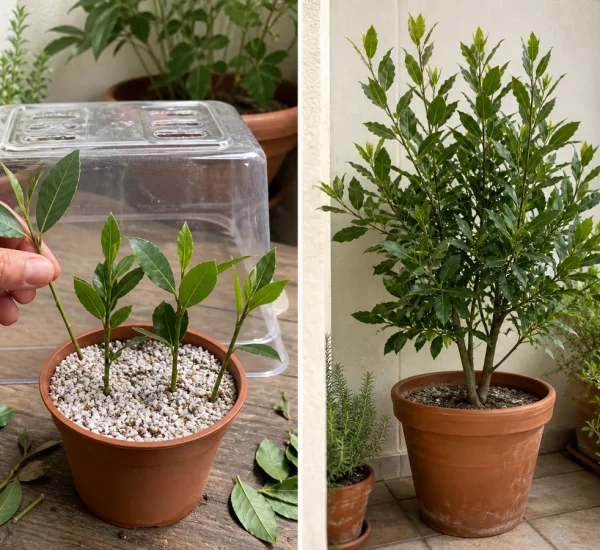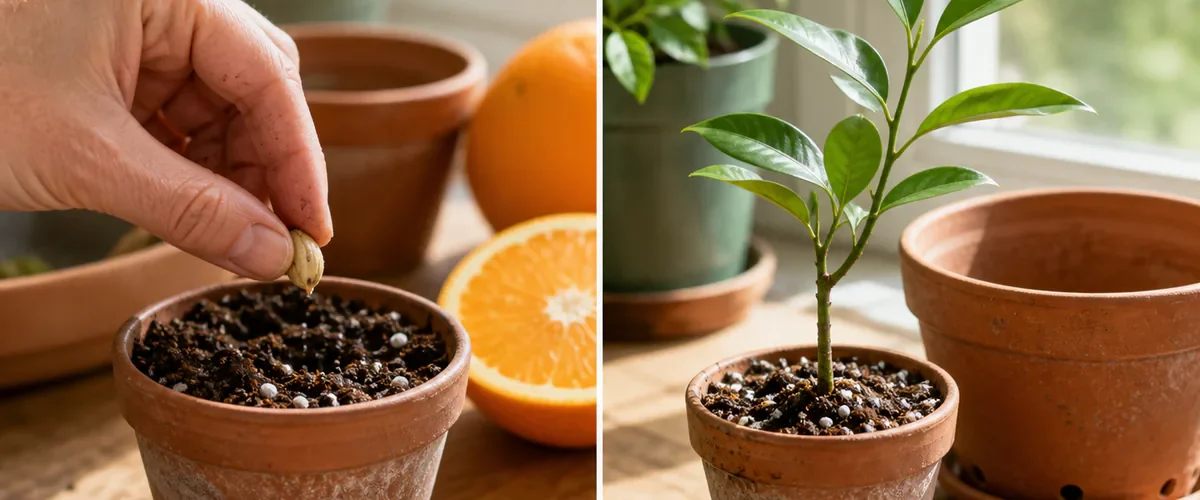
The seed came from the sweetest orange in the bowl. It was washed, tucked under potting mix, and covered to hold warmth. Weeks later, a glossy green hook broke through the surface. A new citrus tree had begun, but would it ever carry the same delicious oranges?
You can grow an orange tree from seed as a rewarding project. Citrus seeds germinate readily when fresh and warm. The surprise is that seedlings often differ from the parent and may remain juvenile for many years, especially indoors. Grow it for the tree first and treat future fruit as a bonus.
Choose a Fresh, Full Seed
Cut a ripe, healthy orange and select plump undamaged seeds. Seedless varieties offer little to plant. Rinse away every trace of pulp because sugar and fruit tissue encourage mold.
Plant promptly while the seed is fresh. Do not let it bake in direct sun or sit for days in a wet paper towel. Prepare the pot before cutting the fruit.
Use a Small Pot With Real Drainage
Start in a clean 3- to 4-inch pot with open drainage holes. Fill it with fresh sterile potting mix containing enough air space for young roots. Garden soil can compact in a container and bring pests or disease indoors.
Moisten the mix evenly, then plant the seed about one-quarter to one-half inch deep. The exact depth is less important than avoiding a deep, soggy burial.
Create Warmth Without Sealing in Rot
Cover the pot loosely with a clear bag or dome to slow moisture loss, leaving room for air. Place it in bright indirect light at a warm, steady temperature. Direct sun through plastic can overheat the pot quickly.
Keep the mix slightly moist, never waterlogged. Open the cover daily for fresh air and remove it once the seedling emerges. Germination may take a few weeks, so do not dig repeatedly to check.
Give the Seedling Strong Light Gradually
Move the new orange seedling into the brightest suitable indoor position. Weak light produces stretched, thin growth. A proper grow light may be needed during dark seasons.
If the plant goes outdoors after frost danger, harden it gradually. Begin in shade and increase sun over a week or more. Sudden outdoor sun can scorch leaves grown behind glass.
Water the Roots, Then Let Them Breathe
Water thoroughly when the upper mix begins to dry, allowing excess to drain. Empty the saucer. Citrus roots suffer when a decorative outer pot holds water around them.
Do not water on a fixed calendar. Temperature, light, pot size, humidity, and growth change how quickly the mix dries.
Repot One Size at a Time
When roots circle the pot or water runs around a dense root ball, move the seedling into a container only slightly larger. Keep the trunk at the same depth. An oversized pot stays wet longer and makes root problems easier.
Use an airy citrus or acid-loving potting mix. Do not bury the seedling in a heavy backyard-soil blend.
Separate Multiple Sprouts Before Roots Tangle
Some citrus seeds can produce more than one shoot. If several seedlings emerge in one pot, wait until they have a few true leaves, then separate them only if the roots can be eased apart without tearing. Otherwise, keep the strongest and snip the weaker stem at the surface.
Handle seedlings by a leaf rather than crushing the tender stem. Pot each survivor at its former depth and protect it from harsh sun for several days while roots recover.
Feed During Active Growth
Once the seedling is established, use a fertilizer labeled for citrus or acid-loving plants. Follow the container rate, often reduced for indoor plants, and feed only during active growth as regional guidance recommends.
More fertilizer will not make a juvenile tree fruit sooner. Excess salts burn roots and leaf edges. Yellowing can also come from wet roots, cold, high pH, or pests.
Shape a Tree Without Chasing Flowers
Remove only dead, damaged, crossing, or weak growth while the seedling is young. Constant tip pruning slows the canopy that gathers energy. Turn an indoor pot for balanced light instead of cutting one side repeatedly.
If thorns develop, treat them as a normal seedling trait and place the plant away from walkways. Wear gloves when repotting, and keep branches clear of children’s play areas.
The Fruit May Not Match the Orange
Commercial citrus is commonly propagated by grafting selected varieties onto rootstocks. A seed combines genetics in a new way and may produce a thorny, vigorous tree with different fruit quality.
Seed-grown citrus can take many years to become mature enough to flower, and indoor plants seldom grow large enough to fruit. For predictable oranges sooner, buy a healthy grafted tree suited to the climate and container.
Watch for Indoor Citrus Pests
- Inspect leaf undersides for spider mites and whiteflies.
- Check stems for scale insects.
- Wash dusty leaves gently.
- Quarantine new plants before placing them nearby.
- Use only controls labeled for citrus and the growing location.
That one orange seed can become a handsome, fragrant houseplant even if it never repeats the fruit that inspired it. Give it warm germination, strong light, airy roots, careful water, and patient feeding. The tiny green tree is the dependable reward; a future orange is the long, fascinating possibility.