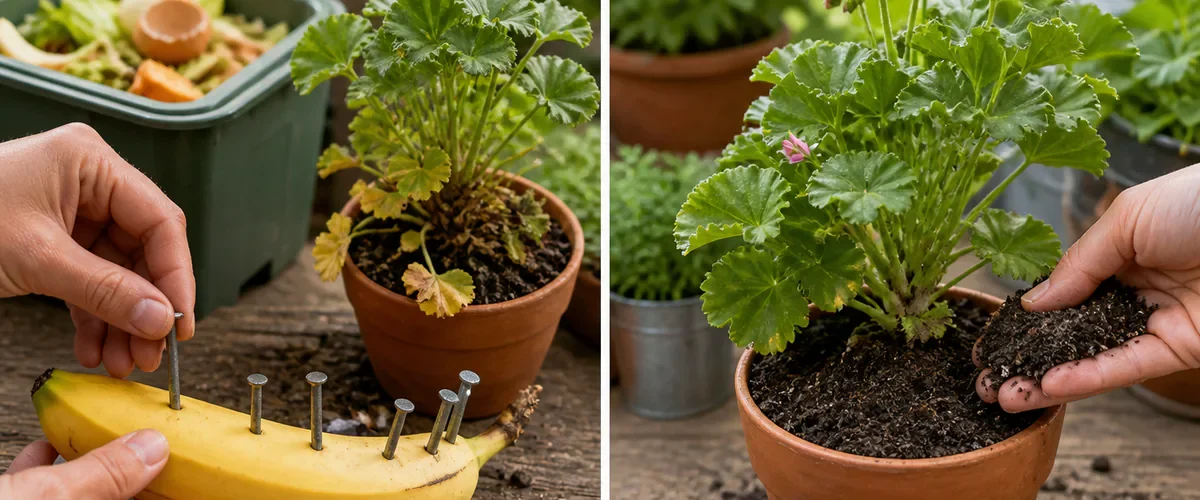
A banana, a handful of nails, and ten quiet minutes sound like the beginning of a miracle fertilizer. Photos of this trick are hard to ignore: push nails through the peel, wait for the metal to react, then bury the banana near a tired plant. The promise is huge. The truth is more useful.
Banana peels can return a small amount of plant food to the soil as they break down. Nails do not turn that peel into an instant iron treatment, however. In fact, burying a whole banana in a flowerpot can create odors, mold, and fungus gnat trouble long before it feeds a root.
You can still turn the idea into a simple homemade plant booster. The secret is to let nature finish the work first.
What the Banana-and-Nails Trick Is Trying to Do
Plants need several nutrients, including nitrogen, phosphorus, potassium, and iron. Banana peels contain potassium and smaller amounts of other minerals. Rusting iron also looks like it should feed a yellow plant quickly.
But roots cannot simply swallow every mineral placed in a pot. Nutrients must be in forms the plant can use, and soil pH controls how available some of them are. A rusty nail releases iron slowly and unpredictably. It will not correct a true iron shortage in ten minutes or even a few days.
The peel has the same timing problem. Until microbes decompose it, most of its nutrients remain locked inside tough plant tissue.
The Safer Miracle Fertilizer Method
The best version of this kitchen trick is not to nail the banana. Eat the fruit, cut the peel into small pieces, and add those pieces to a managed compost pile or worm bin. Mix them with plenty of dry brown material, such as shredded cardboard or dry leaves.
When the compost becomes dark, crumbly, and earthy-smelling, the banana peel is no longer a wet lump that attracts pests. Its nutrients have become part of a balanced soil amendment.
How to Use the Finished Compost
For outdoor containers, mix one part finished compost with three or four parts fresh potting mix when repotting. For an established large pot, add a thin half-inch layer on the surface and water normally. Keep compost away from the stem.
In garden beds, spread about one inch of finished compost over the soil and work it gently into the top few inches. This improves soil structure and supplies nutrients gradually. It is not dramatic in ten minutes, but healthier roots and steadier growth are the results that matter.
When a Plant Really Needs Iron
Iron problems often appear as yellow young leaves with greener veins. Yet overwatering, damaged roots, compacted soil, cold conditions, and naturally pale varieties can look similar. Guessing is expensive because the wrong treatment may make the pot worse.
First, check drainage and watering. If the mix stays wet for many days, allow it to dry and make sure the pot has open holes. If symptoms continue, test the soil or ask a local garden center about a product labeled for the plant. A measured chelated iron treatment works much more predictably than nails.
Three Mistakes That Ruin the Trick
Burying a Whole Banana Indoors
A whole fruit holds sugar and moisture. In a houseplant pot, it can ferment, smell, grow mold, and feed flies. Compost it away from living areas instead.
Adding Peels Every Week
More kitchen waste does not mean more growth. It can reduce air around roots and upset the moisture balance. One thin application of finished compost is enough before you watch the plant’s response.
Treating Every Yellow Leaf as Hunger
Older leaves naturally yellow. Too much water is also common. Fertilizing stressed roots may add salt and cause brown tips. Diagnose light, water, roots, and pests before feeding.
A Faster Option for Hungry Plants
If a plant is actively growing and clearly needs food, use a complete fertilizer labeled for that type of plant. Follow the package rate, or start at half strength for sensitive houseplants. A complete product supplies nutrients in known amounts, something banana peels and nails cannot do.
Never combine several fertilizers in the hope of speeding the result. Roots need moisture, oxygen, and balanced nutrition. They do not respond well to a crowded chemistry experiment.
Keep a short care note after feeding. Record the date, product, dose, and condition of the newest leaves. If growth improves, repeat only at the labeled interval. If leaf edges brown or the soil develops a pale crust, pause feeding and flush the pot with plain water while it drains freely.
The Result Worth Waiting For
The famous banana-and-nails image contains one good instinct: household scraps can become useful instead of going to waste. The missing step is controlled decomposition.
Skip the rusty nails. Compost the peel, use the finished material lightly, and correct real deficiencies with a measured product. That quiet method may not transform a plant in ten minutes, but it can build the kind of soil that keeps producing healthy leaves for months.