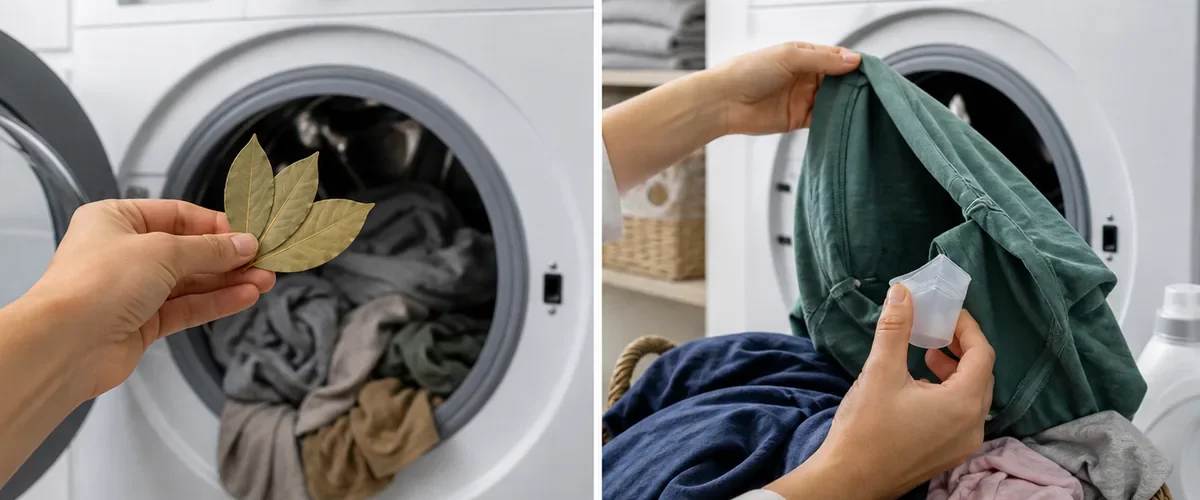
Three bay leaves disappear into the washing machine, and faded clothes supposedly return with richer color. It is the kind of laundry trick that makes people pause before pressing Start. Could a kitchen herb really undo months of fading?
Bay leaves may add scent to hot water, but there is no reliable reason to expect them to restore dye that has already left fabric. Loose leaves can also break apart, lodge in folds, and leave plant debris in the washer.
The useful secret is not hidden in the spice jar. It is a color-protection routine that begins before the clothes enter the drum.
Why Clothing Loses Color
Dye can fade through hot water, long wash cycles, harsh products, sunlight, friction, and repeated drying at high heat. Some new garments also release extra dye during their first washes.
No herb can put missing dye molecules back where they started. A laundry additive may change how clean or bright fabric looks, but that is different from restoring the original color.
If a garment has pale streaks from bleach or permanent sun fading, careful redyeing may be the only true color repair. Check the fiber and consult a dye made for that material.
The Five-Step Color-Saving Wash
Read every care label. Separate dark, bright, pale, and lint-producing items. Turn colored shirts and jeans inside out to reduce rubbing on the visible surface.
Choose the coolest water allowed by the label and a normal or gentle cycle based on soil level. Measure a detergent designed for the machine. Too much detergent can leave residue that makes dark fabric look dull.
Load the drum loosely so items can move and rinse. Remove clothing promptly, then air-dry away from hard sunlight when practical. If using a dryer, select the lowest effective heat.
What to Use for Dull, Washable Colors
First, run a normal wash with the correct amount of detergent. If residue is the problem, an extra rinse may improve the appearance.
For stains or overall dinginess, consider a color-safe oxygen bleach only if the garment label and product directions allow it. Test a hidden area first. Measure exactly and follow the soaking or wash instructions.
Never combine oxygen bleach with chlorine bleach or other cleaners. Products with similar names may contain different ingredients, so read the package every time.
Can You Make a Bay-Leaf Decoction?
Boiling leaves with baking soda and soaking colored clothes for 24 hours is another version of the viral method. That long soak may release unstable dye, affect trims, and expose fabric to an alkaline solution the care label never approved.
If you enjoy the scent of bay, use it outside the washer. Keep a dry sachet in a closet where children and pets cannot reach it, and prevent leaves from touching delicate fabric. A scent sachet is not a cleaning treatment.
Laundry Mistakes That Cause Fading
Guessing the Detergent Dose
More detergent does not mean cleaner clothing. Dose for load size, soil, water hardness, and the washer type. Concentrated products need especially careful measuring.
Washing Everything on Hot
Hot water may be appropriate for certain sturdy items, but many colored fabrics last longer in cooler washes. Let the care label lead.
Drying Until Clothes Are Scorching
Excessive heat stresses fibers and dyes. Remove items when dry rather than extending every cycle. Clean the lint filter for safe airflow.
Leaving Wet Laundry in a Heap
Colors can transfer while damp, and odors develop. Unload the washer promptly. Treat visible dye transfer before applying dryer heat, which may make the mark harder to remove.
Protect the Washer Too
Loose leaves, pods, peels, and powders not approved for laundry can collect in seals and filters. Use only products intended for the machine, placed in the compartment or drum as directed by the appliance manual.
If plant pieces have already entered the washer, remove them after the cycle and check the door gasket. Follow the machine’s filter-cleaning instructions rather than reaching into hidden parts.
Test a New Garment Before the First Full Wash
Press a damp white cloth against an inside seam. If color transfers, wash the garment separately according to its label. A commercial dye-catching sheet may help monitor loose dye when its directions allow, but it cannot guarantee that mixed colors will be safe.
Keep the receipt and care information for expensive items. When a fabric is marked dry-clean only, hand-wash only, or cold separately, the safest color trick is to follow those words from the first wear.
The Real Color-Recovery Trick
Three bay leaves cannot reverse permanent fading, but the viral idea points to a real concern: clothing lasts longer when washing is gentle and measured.
Sort colors, turn garments inside out, use cool water, dose detergent correctly, and keep drying heat modest. That routine is less dramatic than opening the spice cabinet, but it protects color every single week.