Plant one garlic clove in a pot, and a green shoot can appear within weeks. That quick beginning makes the promise of “never buy garlic again” feel possible. The full bulb takes much longer and needs a season, enough space, strong light, and the right planting stock.
A container can produce a satisfying crop, but one grocery clove in a tiny indoor pot usually grows leaves, not an endless supply of large bulbs.
Choose Garlic Meant for Planting
Buy certified seed garlic from a reputable local supplier. Grocery bulbs may be treated to delay sprouting, carry disease, or belong to a variety poorly suited to your climate.
Ask whether hardneck or softneck garlic performs best in your region. Many types need a cold period to divide into a full bulb, which is why planting time matters.
Select firm bulbs with no mold, soft spots, or damaged basal plate. Keep them whole until a day or two before planting.
Use a Much Larger Pot
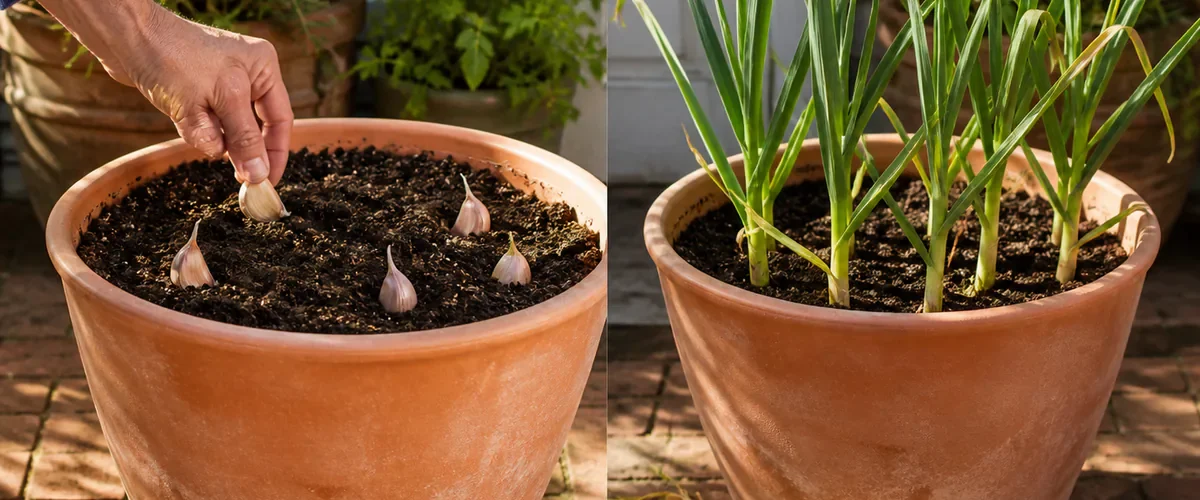
Choose a container at least 12 inches deep with generous drainage holes. Width depends on the number of cloves. Space them about six inches apart and keep them several inches from the edge.
A broad container gives roots steady moisture and room for bulbs to expand. A 20-centimeter pot may hold one small plant, but it dries quickly and limits the crop.
Fill with high-quality container mix, not dense garden soil. Blend in mature compost if the mix needs organic matter. Set the pot on feet or a draining surface rather than in standing water.
Plant at the Right Time and Depth
In cold-winter regions, garlic is commonly planted in fall after the first killing frost but before the ground freezes hard. Mild climates and container conditions vary, so use local extension guidance.
Separate the bulb without peeling the papery skin from each clove. Plant the largest cloves pointed end up, with the base about two to three inches below the soil surface.
Water to settle the mix. Outdoors in cold regions, protect the pot and roots according to local winter advice; containers freeze more deeply than garden beds.
Give It Sun, Water, and Food
Place the pot in full sun, usually at least six hours of direct light. Indoor windows rarely provide enough light for large bulbs, although they can support garlic greens.
Keep the mix evenly moist during active spring growth but never soggy. Water when the upper layer begins to dry. Reduce irrigation as leaves yellow near harvest.
Garlic needs nitrogen early. Use a fertilizer plan based on the potting mix and local recommendations. Stop heavy nitrogen feeding once bulbs begin forming, or leafy growth may continue at the expense of bulbs.
Know What the Plant Is Telling You
Pale leaves can signal low nitrogen, wet roots, cold stress, or disease. Check conditions before feeding. Remove weeds because young garlic competes poorly.
Hardneck types produce a curling flower stalk called a scape. Cutting it after it curls can direct more growth toward the bulb; the tender scape is edible.
Rotate out of the onion family in future containers when disease appears. Do not compost badly rotted or diseased bulbs.
Harvest Before Every Leaf Dies
Garlic is often ready when several lower leaves have browned while upper leaves remain green. Loosen one test bulb carefully. Cloves should fill the wrappers but remain held together.
Lift bulbs instead of pulling hard on stems. Brush off loose soil without washing, then cure plants in a warm, dry, shaded place with good airflow for several weeks.
After curing, trim roots and tops as appropriate for the variety. Store sound bulbs in a cool, dry, ventilated area. Refrigerating every bulb is not always ideal.
Common Container Garlic Mistakes
Do not plant cloves ten centimeters deep in a small pot; they may struggle through wet mix. Do not crowd many cloves together. Do not keep the container indoors all year and expect climate-sized bulbs.
Avoid constant wetness, late heavy fertilizer, and harvesting too late after wrappers split. Each mistake reduces storage life.
Grow Greens While You Learn
If you missed the bulb-planting season, a shallow container of closely spaced cloves can provide garlic greens. Harvest a few inches of leaf at a time and use them like mild chives. These plants may not form large bulbs, so keep them separate from the main crop.
Greens are also a useful light test. Thin, leaning leaves suggest the window is too dim. Move edible plants outdoors only after hardening them gradually and checking local temperatures.
How Close Can You Get to Endless Garlic?
Save the largest healthy bulbs from a successful crop for replanting when local disease guidance permits. Each bulb contains several cloves, so one season can supply the start of the next.
You may still buy garlic while the crop grows or after it is eaten. The real reward is not an endless pot. It is a yearly cycle: plant in season, tend carefully, harvest, cure, cook, and save the best cloves to begin again.