A bottle of vinegar can make a garden tool shine in minutes. The same bottle can also scorch a favorite plant before lunch. That sharp contrast is why the vinegar garden trick keeps spreading online. It looks simple, cheap, and powerful, but the result depends completely on where the liquid lands.
Used carefully, vinegar can help with a few cleaning jobs around the garden. Used as a homemade fertilizer or a casual pest spray, it can damage leaves, roots, soil life, and nearby plants. The real trick is knowing which jobs are worth trying and which ones should stay off your garden list.
What Vinegar Actually Does in a Garden
Household white vinegar usually contains about 5 percent acetic acid. That acid can break down some mineral deposits and surface grime. It can also damage the outer cells of green leaves. This is why weeds may wilt after being sprayed on a bright, dry day.
However, wilting leaves do not always mean the whole weed is dead. Vinegar is mainly a contact treatment. It may burn the top while deep roots survive and grow again. Stronger horticultural vinegar is more dangerous and can injure skin and eyes. It should never be handled like ordinary salad vinegar.
The Safe Vinegar Garden Trick
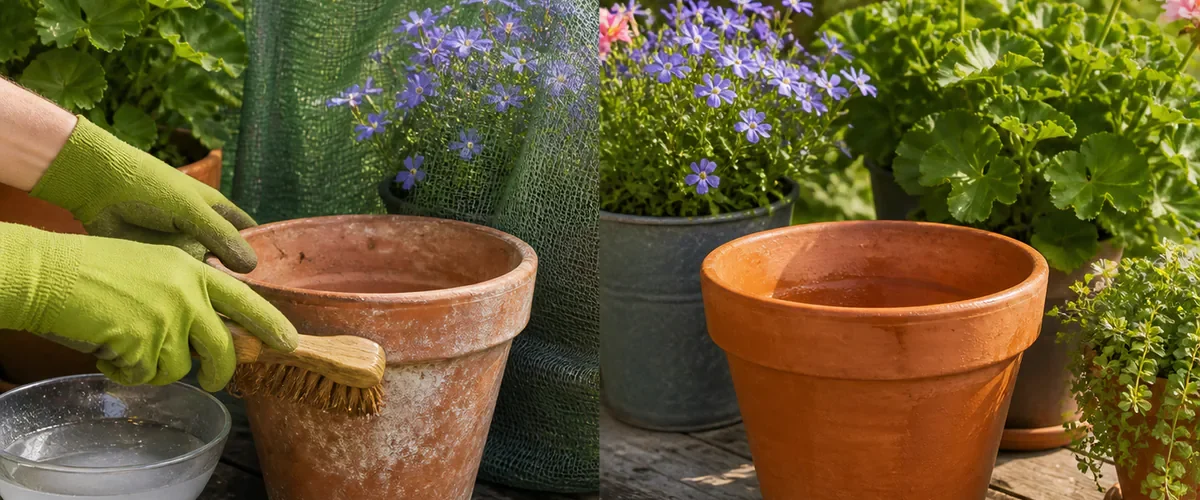
Clean empty clay pots
White crust on terracotta often comes from fertilizer salts and hard water. First, empty the pot and brush away loose soil. Soak or wipe the pot with a diluted vinegar solution, then scrub gently. Rinse it very well and let it dry before adding fresh potting mix. Never pour the used liquid into a planted bed.
Remove deposits from sturdy tools
Vinegar may loosen light rust and mineral buildup on some plain steel tools. Test a small spot first because acid can harm special finishes. Keep wooden handles and moving joints from soaking too long. After cleaning, rinse the metal, dry it at once, and apply a light tool oil to prevent new rust.
Spot-treat weeds on hard surfaces
If local rules allow it, ordinary vinegar may help with a young weed growing through a driveway crack. Shield every wanted plant and use the smallest amount possible. Keep it away from soil where you plan to grow flowers or food. Repeated acid can affect nearby surfaces, and runoff can reach roots at the edge of a path.
Why Vinegar Is Not a Miracle Fertilizer
Plants need nutrients such as nitrogen, phosphorus, potassium, and smaller amounts of other minerals. Vinegar does not provide a balanced meal. It also does not add iron to the soil. Although acid can change how some nutrients behave, guessing at soil pH can create a new problem instead of solving one.
Blueberries, azaleas, and some hydrangeas prefer acidic soil, but that does not mean they should receive kitchen vinegar. Begin with a soil test. If the pH needs adjustment, use a product labeled for that job and follow the measured rate. A slow, tested correction is much safer than a sudden splash around delicate roots.
Three Mistakes That Can Ruin Healthy Plants
Spraying leaves to stop pests
A vinegar and dish-soap spray can burn the pest, but it can burn the leaf as well. Soap made for dishes is not the same as insecticidal soap labeled for plants. Identify the insect first. A strong stream of water, hand removal, or a labeled treatment may solve the problem with less risk.
Adding salt to make it stronger
Salt does not stay politely on one weed. It can move through soil and make it difficult for plants to take up water. Never use a vinegar-and-salt weed mixture in beds, lawns, around trees, or where rain can carry it toward roots.
Mixing vinegar with other cleaners
Never mix vinegar with chlorine bleach. The combination can release dangerous chlorine gas. Do not make mystery mixtures from several cleaners, either. Use one product at a time, read its label, and rinse tools or containers before changing products.
A Better Plan for the Result You Want
For stronger plants, check sunlight, drainage, watering, pests, and soil before reaching for a bottle. Feed only when the plant needs nutrients, using compost or a labeled fertilizer at the correct rate. For weeds, pull them after rain, cover bare soil with mulch, and prevent seeds from forming. For dirty pots and tools, clean them away from growing areas.
Vinegar really can transform part of a garden, but the best transformation may be a clean pot or restored tool, not a drenched plant. Keep the acid on empty, washable surfaces and away from living roots. That one boundary turns a viral gamble into a useful garden habit.
Label any diluted cleaning solution and make only what you need. Store the original bottle closed, away from children, pets, fertilizer, and other cleaners.