A parsley pot often looks generous for two weeks, then becomes a collection of bare stems. The problem is usually not that parsley is difficult. We harvest from the wrong place, use a shallow pot, or wait until the first plant is tired before starting another.
The parsley harvest trick is not an endless life for one plant. It is a simple rhythm: grow in a deep container, cut the oldest outer stems correctly, and sow the next small batch before the current one bolts. Follow that rhythm and fresh stems can keep coming for months.
Start With Seed, Not a Tired Grocery Stem
Online tricks often place cut parsley stems in water and promise new plants. A fresh crown with roots may recover, but ordinary cut stems are unreliable. They can rot before producing a useful root system. Seed is slower at first, yet it is the dependable and inexpensive route.
Parsley seed has a reputation for taking its time. Germination may take two to four weeks, and it can be uneven. Soaking seeds in room-temperature water for 12 to 24 hours is optional, but it may soften the outer coat. Drain them before sowing.
Build the Pot for a Long Harvest
Choose depth and drainage
Parsley develops a strong taproot. Use a container at least 8 to 10 inches deep with open drainage holes. A wider pot gives several plants enough space. Fill it with fresh, well-draining potting mix rather than dense soil dug from the yard.
Sow a little more than you need
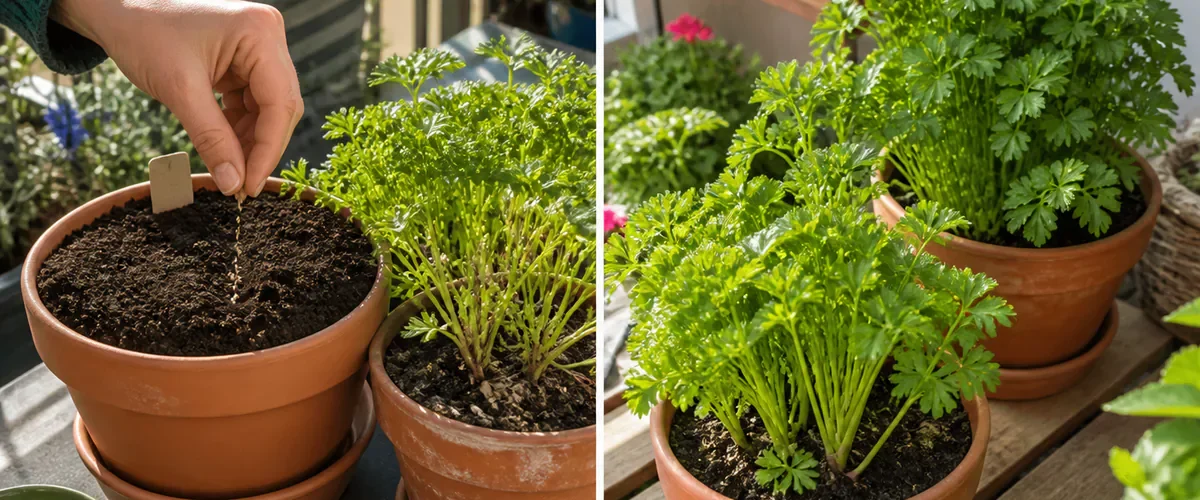
Moisten the mix, scatter the seeds, and cover them with about a quarter inch of mix. Keep the surface evenly damp, not soaked. Once seedlings have true leaves, thin crowded groups so air and light can reach each plant. Snip extras at soil level instead of pulling and disturbing nearby roots.
Give it useful light
Parsley grows well in full sun to partial shade. In hot climates, morning sun and afternoon protection may keep leaves tender. Indoors, place it at the brightest suitable window and turn the pot every few days. Weak, stretched stems usually mean the plant needs more light.
The Harvest Cut That Changes Everything
Wait until each plant has several healthy stems. Then take the oldest outer stems by cutting them close to the base. Leave the young center growth untouched. Cutting only the leafy tops leaves stiff stems behind and reduces the plant’s useful shape.
Harvest no more than about one-third of a plant at one time. Use clean scissors, especially if any plant nearby has leaf spots. Morning harvest often gives crisp stems. Place cut parsley in cool water or wrap it lightly and refrigerate it soon after cutting.
How to Keep New Parsley Coming
Sow a small new section every three to four weeks during suitable weather. You can use several labeled pots or reserve one part of a long planter for each sowing date. When the oldest plants slow down, younger ones are already taking their place.
This is called succession sowing, and it is the honest version of an endless parsley supply. It spreads the harvest across plants of different ages. You will not have to strip one pot bare while waiting a month for seeds to germinate.
Water and Feed Without Creating Weak Growth
Check the mix with a finger. Water when the top inch begins to feel dry, then let extra water drain. A fixed schedule such as three times a day can drown roots in cool weather. Tiny pots may dry fast, but the answer is often a better-sized container rather than constant splashing.
Fresh potting mix may feed seedlings for several weeks. Later, use a balanced liquid fertilizer at the label rate if growth becomes pale and the other conditions are correct. More fertilizer does not create more flavor. Too much can burn roots or produce soft, weak growth.
Watch for Bolting and Common Problems
Parsley is a biennial. It usually grows leaves in its first season and sends up a flower stalk after cold exposure or as it enters its second year. Heat and stress can speed bolting. Once flowering begins, leaves often become tougher and more bitter.
You may let one healthy plant flower for pollinators and mature seed, where local conditions allow. Otherwise, replace bolting plants with younger pots. Yellow leaves can come from waterlogged roots, dry soil, low nitrogen, or natural aging. Check the root zone before feeding.
The Supply That Really Lasts
A deep pot, careful outer-stem harvest, and a new sowing every few weeks make parsley far more productive. None of those steps is dramatic, but together they prevent the familiar feast-then-famine cycle.
Start the next pot while today’s parsley still looks full. That small act is the secret. Instead of asking one plant to live forever, you build a quiet relay of fresh green stems ready for the kitchen.