The apple seed in your hand can become a real tree. It may grow tall, flower one spring, and eventually carry fruit. But it will not be a copy of the apple you ate. The fruit is a genetic surprise, which is both the wonder and the warning behind growing an apple tree from seed.
Most named apples are reproduced by grafting. A piece of the chosen variety is joined to a rootstock, creating a predictable tree. A seed combines genes from two parent trees. Its future apples may be sweet, sour, tiny, large, crisp, or poor for eating. Grow it for the experiment, not for a guaranteed supermarket harvest.
Why an Apple Seed Needs a Cold Winter
Apple seeds contain a natural sleep mechanism. Moist cold conditions tell the seed that winter has passed and spring can begin. This process is called cold stratification. A dry seed placed directly on a warm windowsill may never wake properly.
Seeds from store fruit may be mature, but success varies. Start several because not every seed will sprout. Wash away fruit flesh, let the surface dry briefly, and discard damaged or flat seeds.
How to Cold-Stratify Apple Seeds
Prepare a damp packet
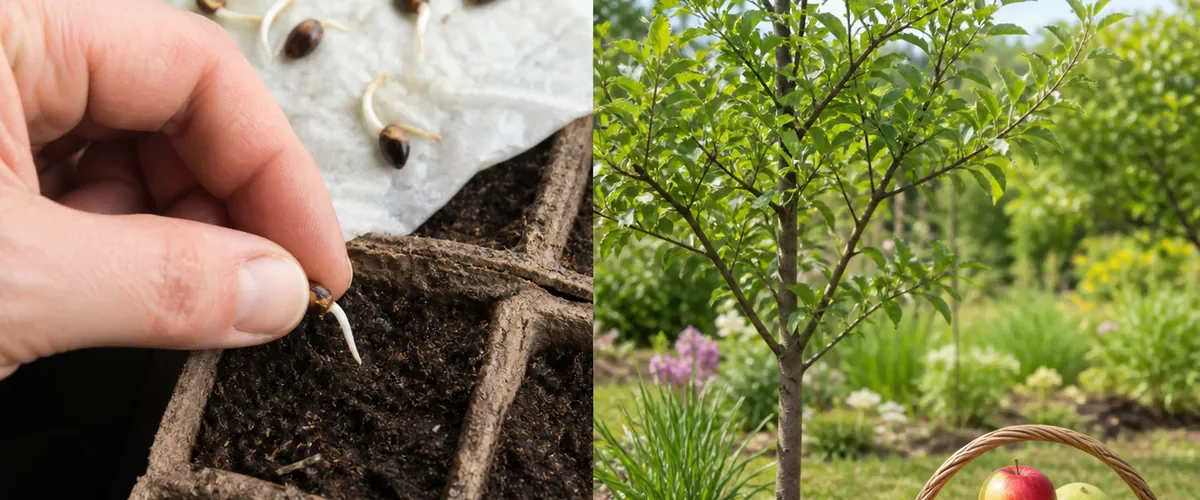
Moisten a clean paper towel or a small amount of sterile seed-starting mix. It should feel damp, not dripping. Fold the seeds inside and place the packet in a labeled, partly closed bag or container. A little air helps reduce stale, waterlogged conditions.
Refrigerate, but do not freeze
Place the seeds in the refrigerator, away from the freezer section. Apples commonly need several weeks of moist chilling. Check them weekly for dryness, mold, or early roots. Remove a moldy seed and replace contaminated material. Keep the packet away from produce that is rotting.
Pot a seed after it wakes
When a small root appears, handle the seed by its shell. Plant it in a small draining pot of fresh seed-starting mix, with the root pointing down if possible. Cover it lightly, water gently, and provide bright light. Do not bury it deeply or leave the pot standing in water.
Care for the Young Apple Seedling
Keep the mix lightly moist while the seedling is small. Once it has several true leaves, begin allowing the surface to dry slightly between waterings. Give it strong light so the stem grows sturdy rather than long and floppy.
If the seedling starts indoors, do not move it straight into full outdoor sun. Harden it off over about a week by giving it gradually longer periods outside in a sheltered place. Protect it from strong wind, hot midday sun, and sudden cold during this adjustment.
Plan for a Tree, Not a Houseplant
An apple seedling can become a large tree because it is growing on its own roots. A small pot will not keep it healthy forever. Before planting, choose a site with good drainage, plenty of sun, and enough distance from buildings, wires, pipes, and neighboring land.
Local climate matters. Apples need different amounts of winter chill, and some diseases are common in certain regions. A local extension office or reputable nursery can explain suitable planting times, rootstocks, fire blight concerns, and pollination partners for your area.
When Will It Produce Apples?
A seed-grown apple may take six to ten years or longer to flower. Some seedlings never become worthwhile fruit trees. Even when flowers appear, compatible pollen from another apple or crabapple blooming at the same time is often needed for a good crop.
This long wait is why people who want reliable fruit usually buy a grafted tree. Grafted varieties often produce sooner, stay at a known size, and carry fruit with known flavor. The label also helps you choose a second variety for pollination.
Mistakes That End the Experiment Early
Do not crack the seed, soak it in strong chemicals, or keep it in a sealed, dripping bag. Do not plant a tender indoor seedling outdoors without hardening it. Avoid adding fertilizer to a new seed-starting mix unless the product directions call for it; young roots burn easily.
Also consider wildlife and pets. Protect a planted seedling from rabbits, deer, and lawn equipment with an appropriate guard. Keep mulch a few inches away from the trunk so moisture does not sit against the bark.
The Best Reason to Grow One
Growing an apple tree from seed teaches patience in a way few windowsill projects can. You watch dormancy break, see the first leaves unfold, and care for a tree whose fruit has never existed before. That is a remarkable result, even if the apples are not award winners.
If you want a dependable harvest, plant a suitable grafted tree. If you want a living mystery, chill several clean seeds and begin. The seed can absolutely become an apple tree; the delicious surprise is that nobody can promise what kind.