A houseplant can wilt in wet soil and look thirsty. Pouring more water makes the leaves droop further because damaged roots cannot breathe. The watering trick that changes everything is not a bottle gadget or a strict schedule. It is checking moisture below the surface and watering the entire root ball only when the plant is ready.
Stop Trusting the Dry-Looking Surface
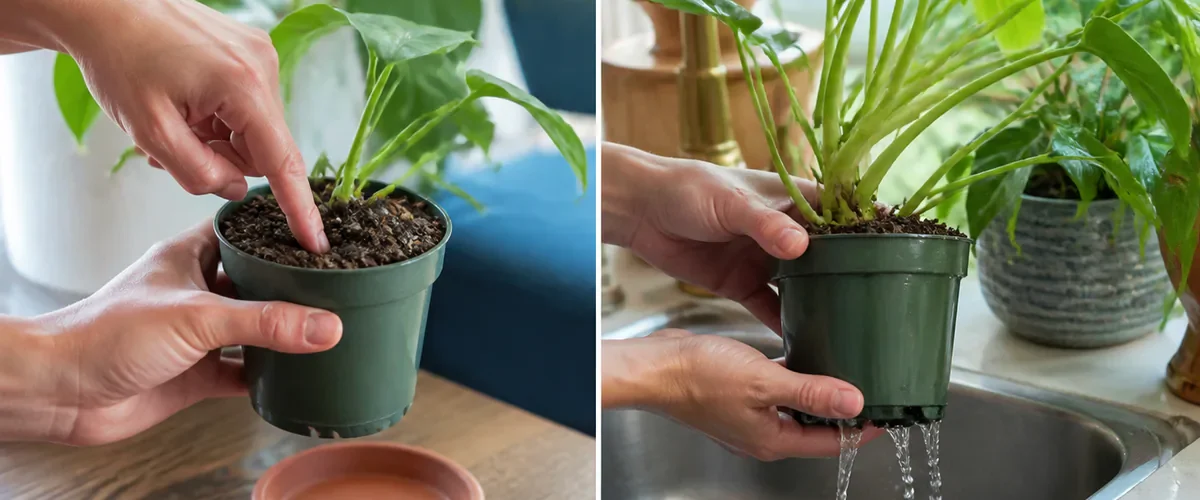
The top of potting mix can dry while the center remains soaked. Push a finger one to two inches deep, use a clean wooden skewer, or lift the pot and learn its dry and wet weight. Large containers may need a moisture check in more than one spot.
Different plants have different thresholds. Succulents often dry deeply; ferns prefer more even moisture. Identify the plant and use its needs as the starting point, then adjust for pot size, light, temperature, and season.
Water the Whole Root Ball
When water is needed, pour slowly across the surface until it leaves the drainage holes. Pause and repeat if dry mix initially repels water. Empty the saucer after drainage. This wets roots evenly and flushes some accumulated salts.
A daily splash moistens only part of the pot and encourages shallow roots. It also makes the calendar, rather than the plant, control care. Check regularly, but water only after the moisture test says yes.
Make Sure Water Can Escape
Every planted container needs a drainage path. A nursery pot placed inside a decorative cover is practical, but it must be lifted out for watering and allowed to drain before returning. Never let the inner pot stand in hidden water.
Adding gravel below mix does not replace a hole and can leave less room for roots. Use a container with drainage, a suitable potting mix, and a saucer that protects furniture.
Fix Mix That Has Become Water-Repellent
Very dry peat-based mix may pull away from the pot, letting water run down the sides. Set the draining nursery pot in a shallow basin of water for 10 to 20 minutes, then remove it and let it drain fully. Do not soak indefinitely.
Break up only the loose top surface without tearing roots. If water continues bypassing a hard root ball, repot during the plant’s suitable season using fresh mix and a container only one size larger.
Recognize Overwatering Before Roots Collapse
Persistent wetness, yellow lower leaves, soft stems, fungus gnats, and a sour smell suggest trouble. Slide the plant out if safe and inspect roots. Healthy roots are generally firm; rotted roots are dark, soft, and may smell bad.
Trim severe rot with clean tools, repot into fresh draining mix, and correct the cause. Do not fertilize a plant with damaged roots. If most roots and the crown have collapsed, propagation from a healthy section may be the best rescue.
Adjust for Seasons and Rooms
A sunny summer plant uses water faster than the same plant in a cool winter room. Heating, air conditioning, wind, and humidity also matter. Move plants away from hot vents and cold drafts.
Record the date after watering for awareness, not as the next deadline. Over several weeks, the notes reveal a range. Continue checking because that range changes as roots grow and weather shifts.
Use Self-Watering Tools Carefully
Wicks, reservoirs, and drip bottles can help during short absences, but they must be tested before travel. Flow depends on soil, bottle height, hole size, heat, and plant use. A clogged dripper can leave a pot dry; an oversized hole can flood it.
Set up the system a week early and measure how long the water lasts. Keep reservoirs covered from mosquitoes and away from electrical outlets. For long trips or valuable plants, ask a reliable person to check conditions.
Group Plants by Real Needs
Place moisture-loving plants together and dry-growing plants elsewhere. This reduces mistakes when moving through the room with a watering can. Still check each pot, because root size and container material change drying speed.
Terracotta loses moisture through its walls; glazed ceramic and plastic hold it longer. A small root-bound pot may need water often, while an oversized pot stays wet around a small root ball.
The Watering Habit That Works
Use room-temperature water when possible and follow special quality guidance for sensitive plants. If white crust builds on the pot or mix, review fertilizer and water hardness. Periodic thorough drainage may help, but do not flush a plant that cannot tolerate the water source or whose roots are already rotting.
Check deeply, water completely, drain fully, and check again later. Those four actions are less dramatic than an upside-down bottle, but they respond to the roots instead of a timetable.
Once you learn the weight and feel of each pot, watering becomes faster and more accurate. The useful trick is attention: the plant tells you when it is ready, and you finally stop answering every drooping leaf with more water.