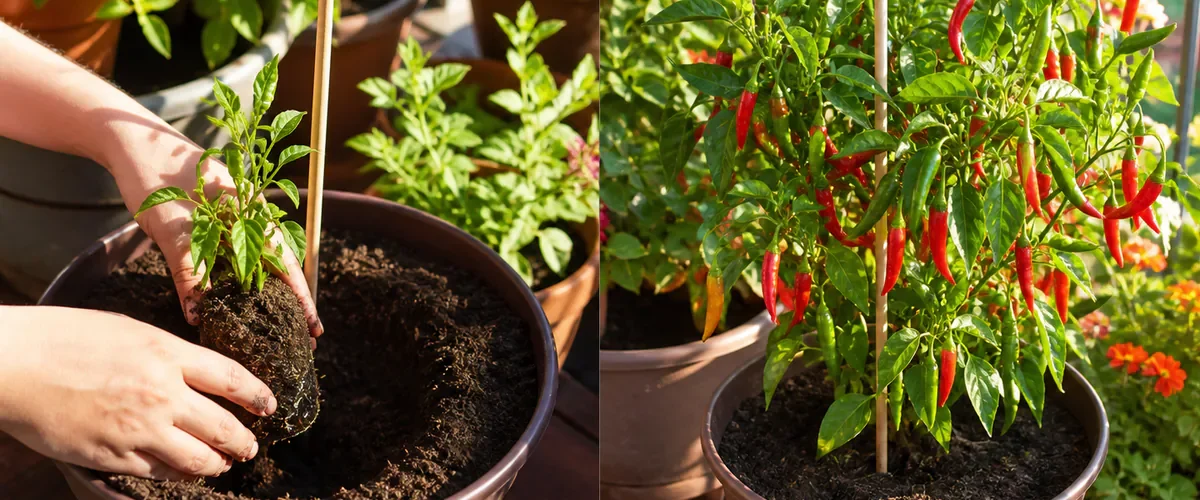
A chili plant in a pot can carry dozens of bright peppers, even on a small balcony. The container does not need to be clever. It needs enough root volume, drainage, sun, warmth, and steady care. Get those five pieces right and one plant can deliver a surprisingly long harvest.
Choose a Pepper That Fits the Season
Compact chili varieties suit containers and short growing seasons. Check the seed packet for days to maturity, mature height, and heat level. In cool regions, start seeds indoors eight to ten weeks before safe outdoor planting or buy healthy nursery starts.
Use fresh seed-starting mix and warmth. Pepper seeds often germinate best around 75–85°F, but follow the variety instructions. Once seedlings emerge, provide strong light close enough to prevent thin stems without overheating leaves.
Use a Pot Large Enough for Roots
A mature pepper generally performs better in a container holding at least five gallons, with one plant per pot. Large varieties may need more. Drainage holes must stay open, and the pot should be stable when branches carry fruit.
Fill it with quality container mix, not dense garden soil. Leave watering space at the rim. A dark pot can become dangerously hot in summer; shade the container wall or choose a lighter color while keeping foliage in sun.
Transplant Without Shocking the Seedling
Wait until nights are reliably warm and frost danger has passed. Harden seedlings over seven to ten days, beginning with sheltered shade and adding outdoor time and sun gradually.
Water before transplanting. Slide the root ball out carefully, set it at the same depth, and firm mix gently. Unlike tomatoes, peppers are not normally buried deeply. Water thoroughly and protect from strong wind for the first day.
Give Chili Peppers Real Sun
Most peppers need six to eight hours of direct sun for strong flowering and fruit. In extreme heat, late-afternoon shade can prevent scorched fruit and pollen failure. Move containers only if their size and weight allow safe handling.
Turn balcony pots weekly for even light. Indoor windows often fail to provide enough intensity for heavy fruiting, so a suitable grow light may be necessary.
Water Deeply and Consistently
Check the top inch or two of mix. Water slowly until excess drains, then empty saucers. Do not give tiny daily sips or let the plant wilt severely between soakings. Large swings can drop flowers and contribute to fruit problems.
Mulch the surface lightly to slow drying, keeping mulch away from the stem. During hot windy weather, check daily without assuming the pot needs water. A finger test or pot weight is more reliable than the calendar.
Feed Flowers Without Burning Roots
Container nutrients wash out over time. Begin with a mix that contains starter nutrition, then use a tomato or pepper fertilizer according to its label. Excess nitrogen creates a huge leafy plant with fewer peppers.
Never add concentrated coffee, banana water, salt, or mystery tablets. Pale leaves can also mean cold soil, saturated roots, high pH, or pests. Diagnose before feeding.
Help Flowers Become Peppers
Pepper flowers can pollinate themselves, but movement helps. Outdoors, wind and insects usually do the work. Indoors or on a still balcony, tap the flowering stem gently at midday. Avoid spraying open flowers.
Flowers may drop during extreme heat, cold nights, drought, or excess nitrogen. Correct the condition and wait for the next flush rather than adding more fertilizer.
Support and Protect the Plant
Add a small stake before roots fill the pot. Tie stems loosely with soft material. Inspect leaf undersides for aphids, mites, and whiteflies. Rinse early colonies and use only products labeled for edible peppers, respecting the harvest interval.
Wear gloves when handling hot varieties. Capsaicin can transfer from fruit to eyes and skin. Keep peppers and tools away from children and pets, and wash hands even after using gloves.
Harvest for More Fruit
Cut peppers with clean scissors instead of pulling branches. Many varieties can be picked green or left to ripen to their mature color, when heat and sweetness may change. Frequent harvesting encourages the plant to continue flowering in suitable weather.
Finish the Season Well
Before frost, harvest usable fruit and discard diseased plants. Healthy peppers can sometimes overwinter indoors after careful pest inspection, but reduced light means less water and no expectation of heavy fruit. Keep them separate from houseplants at first. Clean pots and stakes before reuse, and replace mix that carried serious soil disease.
One pot will not replace every pepper purchase forever, especially through winter. But a well-chosen variety in a large sunny container can produce far more than its footprint suggests. The secret is not one ingredient; it is giving roots and flowers the steady conditions they need.
Record the exact variety and first harvest date to improve next season’s timing.