Your orchid still has green leaves, but the roots look tired and the flower spike has not moved in months. Then you see a cloudy bowl beside the sink and wonder: could this leftover water help?
Rice water for orchids has become a popular low-waste plant trick. It sounds perfect because it costs almost nothing and keeps kitchen water out of the drain. Yet orchids are not ordinary houseplants. Their exposed roots need air, gentle feeding, and excellent drainage. Used with care, fresh rice water can be a mild extra. Used too often, it can turn the pot into a sticky home for mold and tiny pests.
Here is the simple, safer way to try it – and the signs that tell you when to stop.
Why Rice Water Gets So Much Attention
When rice is rinsed or soaked, some starch and small amounts of plant nutrients move into the water. That cloudy liquid looks rich, so it is easy to imagine it acting like fertilizer.
The truth is less dramatic but more useful. Rice water is not a complete orchid food. Its nutrient level changes with the type of rice, the amount of water, and how long it sits. It may support microbes in the potting mix, but the starch can also feed unwanted mold.
Think of rice water as an occasional experiment, not the main meal. A balanced orchid fertilizer gives a known amount of nitrogen, phosphorus, potassium, and smaller nutrients. Rice water cannot promise that balance.
How to Make Rice Water for Orchids Safely
Fresh, weak rice water is the safest place to begin. You do not need to ferment it for days or create a strong brew.
What you need
- 1 tablespoon of uncooked, plain rice
- 2 cups of room-temperature water
- A clean bowl and fine strainer
- Another 2 cups of fresh water for dilution
Simple method
- Rinse the rice quickly once and pour that first dusty water away.
- Add 2 cups of fresh water and swirl the rice for about 30 seconds.
- Strain the cloudy water into a clean container.
- Mix it with an equal amount of fresh water.
- Use it right away. Do not add salt, oil, seasoning, or cooked rice.
Never use water from a seasoned rice pot. Salt can damage orchid roots, and oils can coat the airy bark that keeps those roots healthy.
The Best Way to Apply It
Check the pot before watering. If the roots are silver and the bark is nearly dry, the orchid is ready. Green roots and damp bark mean it can wait.
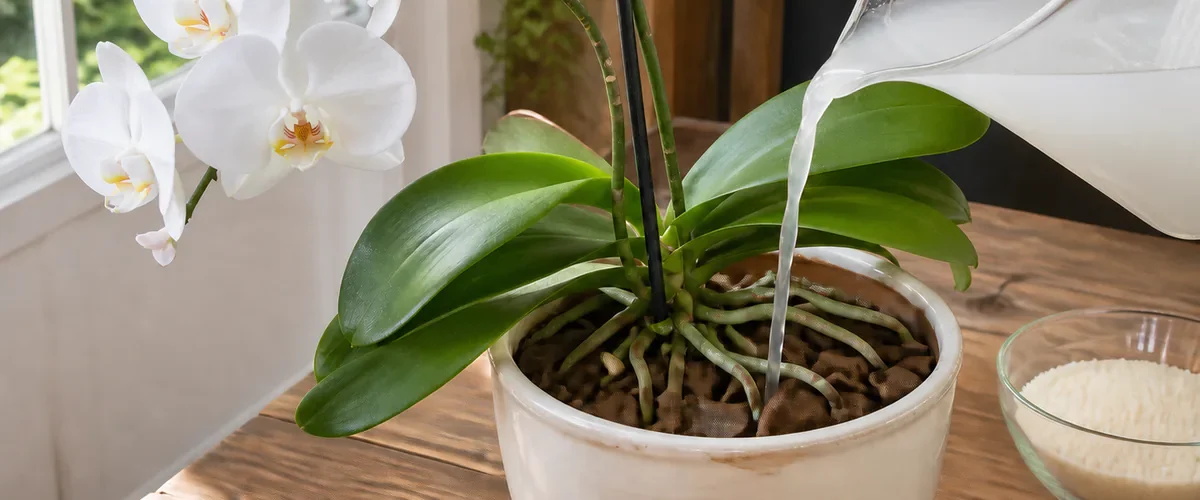
Set the inner pot in a sink. Slowly pour the diluted rice water over the potting mix, avoiding the crown where the leaves meet. Let the liquid run freely from the drainage holes. Never leave an orchid standing in a saucer of rice water.
Try this no more than once a month during active spring or summer growth. Use plain water for the other waterings. If you already apply orchid fertilizer, replace one light feeding with the rice-water test rather than adding both on the same day.
What Results Should You Expect?
A healthy orchid will not suddenly bloom the next morning. New root tips or a firm new leaf appear slowly. Those are better signs than a quick burst of soft growth.
Blooming depends heavily on the whole care routine. A moth orchid often refuses to rebloom because it lacks bright, indirect light. Temperature changes, healthy roots, and the plant’s natural season matter too. No kitchen liquid can repair rotten roots or replace enough light.
Give the experiment two or three months and take a photo before you begin. That makes small changes easier to judge. If nothing improves, return to a measured orchid fertilizer and review the light and roots.
Warning Signs That Mean Stop
Stop using rice water for orchids if you notice a sour smell, fuzzy growth, a slimy surface, or more fungus gnats around the pot. Flush the bark well with plain water and let it drain.
Black, soft roots are a bigger concern. Remove the plant from the pot, trim dead roots with clean scissors, and repot it in fresh orchid bark. Rice water should never be used to “feed away” root rot.
Common Rice Water Mistakes
- Using it too strong: More starch does not mean more nutrition.
- Letting it ferment: A bubbling or sour brew can upset the pot’s small ecosystem.
- Pouring it into the crown: Trapped liquid can lead to crown rot.
- Keeping leftovers: Fresh is safer. Pour unused water into an outdoor compost pile.
- Expecting it to force flowers: Light and healthy roots come first.
A Better Low-Waste Orchid Routine
If you enjoy sustainable plant care, keep the experiment small. Water only when the bark approaches dryness. Feed active plants lightly with a complete orchid fertilizer. Flush the pot with plain water about once a month to remove salts, and replace broken-down bark when it becomes dense and soggy.
Rice hulls can be useful in some professional orchid mixes, but loose kitchen rice does not belong in the pot. Grains swell, decay, and attract pests. Compost them instead.
The real surprise is not that rice water is a miracle. It is that a gentle, free kitchen leftover may fit into an already good routine. Keep it fresh, dilute it, watch the roots, and let your orchid decide whether the trick deserves a place beside the watering can.