The kitchen felt ordinary until the first curl of steam reached the hallway. Within minutes, the sharp, green scent of rosemary had moved through the house. It did not smell like a spray or a candle shop. It smelled clean, warm, and quietly alive.
That is the simple promise behind boiling rosemary at home. A handful of sprigs and a pot of water can create a natural simmer pot that changes how a room feels. The result is real, but it is also easy to overstate. Rosemary steam can add fragrance and a little moisture to nearby air. It does not disinfect your home, remove every odor, or cure a health problem.
Used the right way, it is still a lovely household ritual.
What Happens When You Boil Rosemary?
Warm water releases rosemary’s aromatic compounds into the steam above the pot. As air moves through your home, it carries that woodsy scent beyond the kitchen.
The biggest change you will notice is the smell. Cooking odors may seem softer because the rosemary fragrance sits over them, though it does not truly remove the source. The simmering water also adds a small amount of humidity close to the stove. In a large or very dry home, the effect will be limited.
There is another part that is harder to measure. Scent is tied closely to memory. Rosemary may remind you of a garden, a holiday meal, or a sunny path. That familiar note can make an ordinary room feel more settled.
How to Make a Rosemary Simmer Pot
You do not need exactly ten branches, and more is not always better. Eight to ten small sprigs create a strong scent in an average kitchen.
You will need
- 8 to 10 fresh rosemary sprigs
- 4 to 6 cups of water
- A medium saucepan
- A wooden spoon and a timer
Step-by-step method
- Rinse the rosemary to remove dust and garden debris.
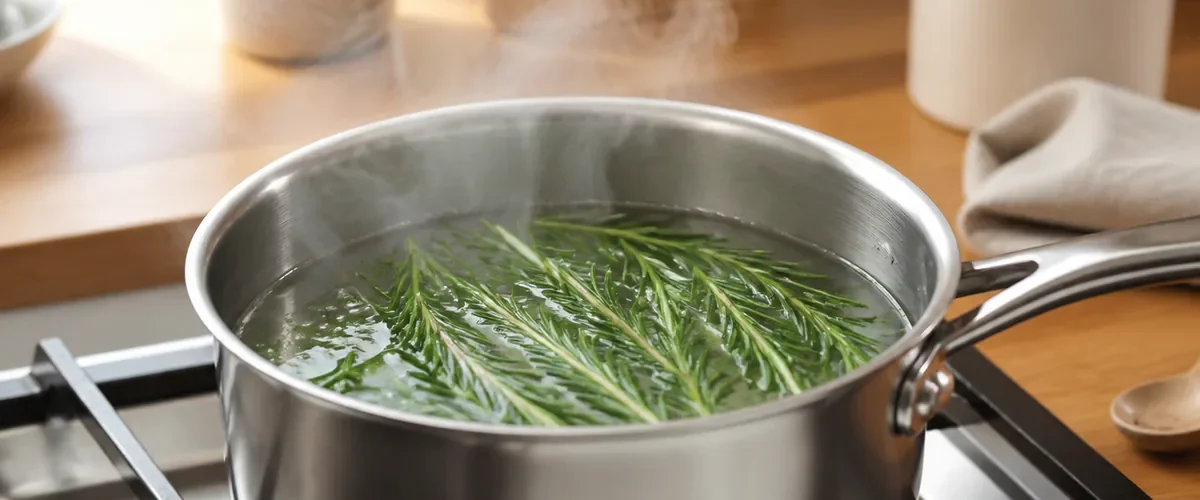
- Place the sprigs in a saucepan and cover them with water.
- Bring the water just to a boil.
- Lower the heat at once and keep it at a gentle simmer.
- Let it simmer uncovered for 20 to 30 minutes.
- Check the water every 10 minutes and add more if the level drops.
A hard, rolling boil wastes water and can make the herbal scent feel harsh. Gentle heat is enough. Keep an interior door open if you want the aroma to travel, or close the kitchen door for a stronger effect in one room.
Small Additions That Change the Mood
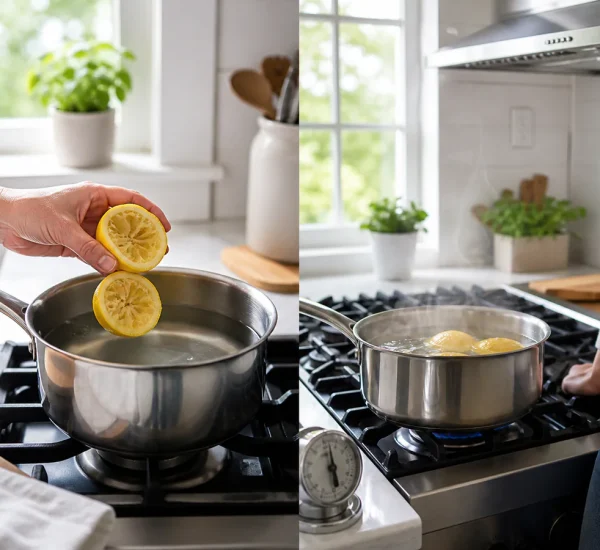
Rosemary works well alone, but a few kitchen scraps can shift the scent. Add one strip of lemon peel for a brighter note. A slice of apple and a small cinnamon stick make it warmer. Use only a little at first so the rosemary does not disappear beneath stronger spices.
This is a good use for clean citrus peels that would otherwise go into the compost. Avoid adding fragrance oil or household cleaner to the pot. Heating products that were not made for cooking can release irritating fumes.
The Safety Rule You Cannot Skip
Never leave a simmer pot unattended. Set a timer, stay on the same floor, and turn the burner off before leaving the room for long. A forgotten pot can boil dry, damage cookware, and start a fire.
Turn pot handles inward and keep children and pets away from the stove. Steam can burn skin even when the water is not bubbling hard. If anyone in the home has asthma, fragrance sensitivity, or headaches triggered by strong smells, begin with two or three sprigs and keep a window slightly open.
Rosemary used in cooking is not the same as concentrated rosemary essential oil. Do not add essential oil to boiling water, and do not assume that a natural product is safe for every person or animal.
Can You Reuse the Rosemary Water?
If the pot contained only clean, food-safe rosemary and water, the cooled liquid can be strained and refrigerated for up to two days. It may be used as a light cooking liquid in soup, beans, or gravy, but taste it first because a long simmer can make it bitter.
Do not cook with the liquid if the rosemary came from a florist, roadside planting, or a garden recently treated with pesticides. Do not store a pot that sat uncovered all day. When in doubt, let it cool and add it to the compost.
What About Rosemary Water for Hair?
Online posts often promise that boiled rosemary water will stop hair loss or regrow thin areas. Research on rosemary oil does not prove that homemade rosemary water produces the same result. The water is much weaker, and its strength changes with every batch.
If you still want to try it as a hair rinse, cool and strain it fully, patch-test a small area of skin, and stop if redness or itching begins. Keep it out of your eyes. Sudden or ongoing hair loss deserves advice from a healthcare professional, not a saucepan remedy.
Common Mistakes That Spoil the Experience
- Using too little water: The pot can dry out before the scent spreads.
- Boiling on high heat: This shortens the simmer and increases the risk.
- Trying to cover a dirty source: Empty the trash and clean cooking spills first.
- Saving old liquid too long: Cloudiness, bubbles, or an off smell mean it should be discarded.
- Expecting medical results: Enjoy rosemary as fragrance, not a cure.
A Simple Ritual Worth Repeating
Boiling rosemary at home works best because the result is modest and immediate. In about five minutes, the first green notes begin to rise. After twenty minutes, the scent may reach nearby rooms and soften the memory of last night’s cooking.
It will not purify the air or solve every household odor. What it can do is make a familiar space feel freshly tended with almost no waste. Sometimes that small change is exactly what a home needs.