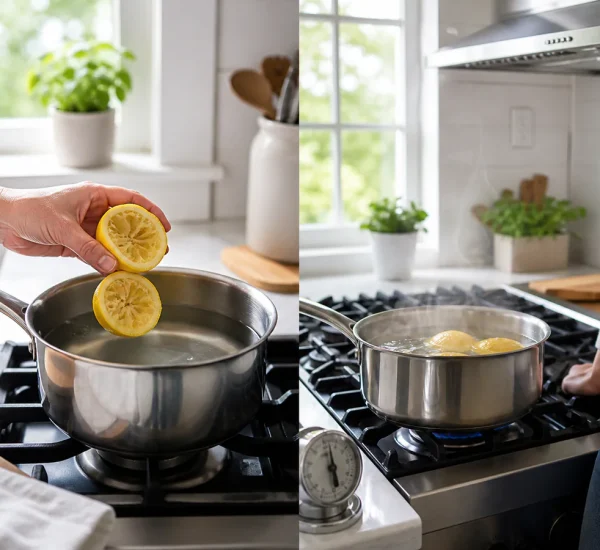
A kitchen spray of vinegar and lavender may smell strong enough to chase mosquitoes away. That scent does not prove it will protect skin from bites or mosquito-borne illness, and “natural” does not guarantee it is safe for children, pets, plants, furniture, or sensitive skin.
The safest powerful prevention plan combines a tested repellent with screens, clothing, and the removal of standing water. Skin safety changes everything because a homemade recipe has no verified dose, protection time, or label.
Why the Vinegar-Lavender Recipe Falls Short
Vinegar can irritate skin and eyes. Essential oils are highly concentrated and do not mix evenly with water or vinegar without proper formulation. Droplets may carry a stronger dose than expected.
Lavender scent may influence some insects briefly, but a home mixture has not been evaluated like a registered skin repellent. It should not be sprayed broadly on children, faces, irritated skin, pets, plants, bedding, or food surfaces.
Do not assume apple cider vinegar’s food use makes it suitable for repeated skin application. Eating and spraying are different exposures.
Choose a Repellent With Tested Protection
In the United States, the CDC recommends EPA-registered repellents with active ingredients such as DEET, picaridin, IR3535, oil of lemon eucalyptus or PMD, and 2-undecanone. Registration means the product has supplied safety and effectiveness information for review.
Read the complete label and choose protection time that matches the activity. Apply only to exposed skin or clothing as directed, never beneath clothing. Do not spray directly into the face; place it on adult hands first and apply carefully around the face while avoiding eyes and mouth.
Do not apply to cuts or irritated skin, breathe the spray, or use it near food. Wash treated skin and clothing after returning indoors.
Special Care for Children
Follow the age limits and directions on the product. CDC guidance says not to use products containing oil of lemon eucalyptus or PMD on children under three. Adults should handle the repellent and keep it off a child’s hands, eyes, mouth, and broken skin.
Cover strollers and baby carriers with mosquito netting and dress children in clothing that covers arms and legs when conditions allow. Ask a pediatric health professional when a child has special medical or skin concerns.
Remove the Water Where Mosquitoes Begin
Walk around the home every week. Empty buckets, toys, plant saucers, tarps, and containers that hold rain. Change water in bird baths and clean their sides. Cover rain barrels securely and clear clogged gutters.
Even a small amount of water can support larvae. Scrubbing matters because eggs may cling to container walls. For water that cannot be emptied, use only a larvicide labeled for that exact use and follow directions.
Block the Door and Window Routes
Repair screens, close gaps, and use air conditioning where available. A fan over an outdoor sitting area can make it harder for mosquitoes to land, though it is not a replacement for repellent where disease risk is present.
Wear long sleeves and pants. Clothing and gear may be treated with permethrin only when a product label allows; permethrin should not be applied directly to skin.
Plan Around Peak Activity
Different mosquito species bite at different times, including daytime. Do not rely only on avoiding dusk. Check local public-health notices, especially before travel or when mosquito-borne illness is reported. Choose screened or air-conditioned spaces, carry the registered repellent with you, and reapply only as its label directs after time, sweat, or water exposure. For outdoor gatherings, reduce nearby containers before guests arrive and place fans where people sit rather than trying to perfume the entire yard.
Do Not Turn the Room Into a Spray Zone
Spraying vinegar and oil over curtains, furniture, floors, and plant leaves can stain finishes, irritate lungs, harm plants, and expose pets. A pleasant odor does not create a reliable indoor barrier.
Spatial repellents and insecticides must be used only where their labels permit. A product made for outdoors may be unsafe in a closed room.
When Mosquito Pressure Stays High
Report standing water on neglected property where local services accept reports. Community mosquito-control teams can identify breeding sites and recommend region-specific action.
Seek medical advice for concerning illness after bites, especially when fever, severe headache, rash, weakness, or other significant symptoms appear. Mosquito risk varies by place and season.
The Strongest Plan Is the One With Evidence
Vinegar and lavender are familiar kitchen and fragrance ingredients, but their homemade mixture is not the most powerful mosquito insecticide. It does not provide a tested protection time and should not be trusted on skin.
Use a registered repellent exactly as labeled, cover exposed skin, repair screens, and empty standing water every week. That layered plan may be less dramatic than a free spray, but it protects the household with evidence instead of scent alone.