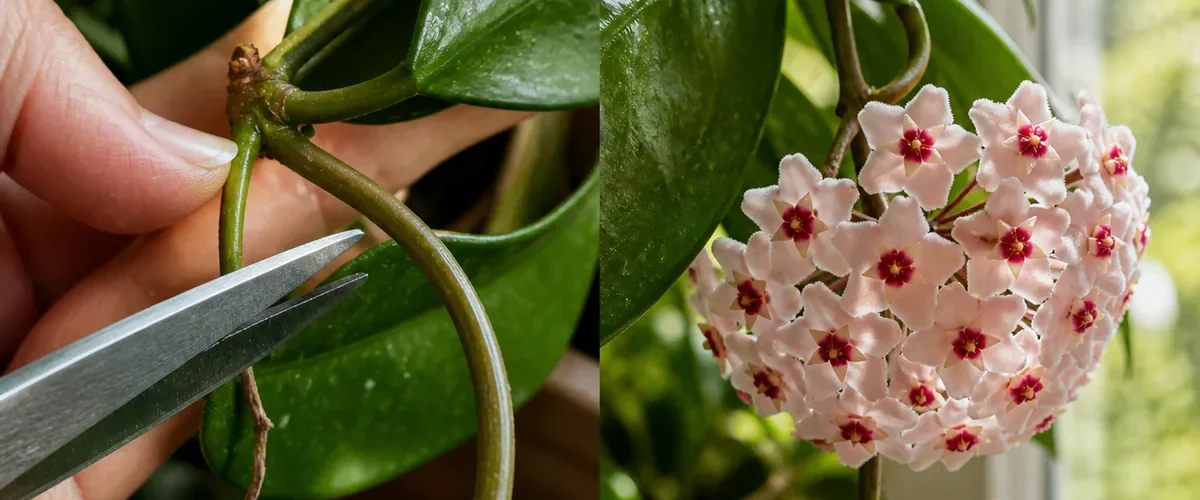
A hoya can spend years weaving glossy vines across a window and refuse to bloom. Then one short spur on an old stem produces a perfect cluster of waxy stars. That spur is the bloom secret many owners accidentally cut away while making the plant look tidy.
Hoyas often rebloom from the same peduncles. Preserve those small flower stalks, then provide the light and steady care that help the plant load them with buds.
Find the Peduncles Before Pruning
A peduncle is a short woody spur where a flower cluster formed. After blooms fall, it can look bare or untidy. Do not remove it unless it is clearly dead or damaged.
New flowers may appear from that same point during the next cycle. You can trim truly dead vines or shape excessive growth, but inspect every cut first. Use clean scissors and avoid removing more foliage than necessary.
Give the Hoya Bright Filtered Light
Hoya carnosa and many common hoyas bloom best in strong indirect light with some gentle sun. A very dark room can produce long searching vines with few flower spurs.
Move the plant closer to a bright window gradually. Early morning or late-day sun may be suitable, while strong midday rays through glass can scorch leaves. Variegated hoyas often need more light because pale leaf areas contain less chlorophyll.
A grow light can help where windows are weak. Use a timer and position it according to the fixture directions.
Let the Mix Approach Dryness
Thick hoya leaves store some water. Check the pot below the surface and water thoroughly when the mix has partly dried. Let all excess escape.
Constantly wet soil turns roots soft and yellow leaves follow. Repeated severe drought can cause buds to shrivel and fall. The goal is a steady wet-dry rhythm, adjusted for season, heat, pot size, and light.
Use an airy mix and a container with drainage. A huge pot stays wet around a small root system. Hoyas may bloom while snug, but being painfully root-bound is not a requirement.
Do Not Move a Budding Plant Repeatedly
Once buds form, avoid changing the plant’s direction and location without need. Shifts in light, temperature, moisture, and drafts can contribute to bud drop.
Keep it away from cold air-conditioning, hot vents, and extreme heat. Support climbing vines on a trellis or allow them to trail, but tie gently without crushing stems.
Feed Growth Without Chasing Hundreds of Flowers
During active growth, use a complete fertilizer labeled for houseplants at the recommended rate. Excess nitrogen can encourage vines and leaves without solving flowering. A high-phosphorus product cannot overcome darkness or damaged roots.
Flush the pot occasionally with plain water to limit salt buildup. Reduce feeding when cool seasons slow growth.
Humidity Helps, but Air Matters Too
Many hoyas appreciate moderate humidity. A clean humidifier can help in a dry room, yet wet leaves in stagnant air invite spotting. Give the plant gentle circulation and let splashed foliage dry.
Do not keep a water-filled tray touching the pot. Root moisture and room humidity are different problems.
Watch for Pests on Hidden Vines
Mealybugs and scale can hide at nodes, beneath leaves, and around peduncles. Sticky residue or cottony clusters deserve attention. Inspect a long vine section by section.
Isolate an affected hoya, identify the pest, and choose a labeled indoor-plant treatment. Strong homemade oil mixtures can burn leaves and coat the flower spurs you want to protect.
Why Buds Fall Before Opening
Dry roots, saturated mix, intense heat, cold drafts, pests, and moving the plant can all trigger bud loss. Review the week before the fall instead of responding with extra fertilizer.
Newly purchased hoyas may also need time to adjust. Stable conditions are more important than constant intervention.
Maturity and Variety Set the Timeline
A small cutting may spend several seasons building roots and vines before it flowers. Some hoya species bloom readily in a sunny window, while others need different temperature, moisture, or light conditions. Confirm the plant’s identity and avoid comparing a young cutting with a decades-old specimen online.
Watch for mature firm vines, short peduncles, and steady leaf growth. Mark the date when buds first appear and note the location and watering pattern. That record teaches you what this plant needed before flowering and helps you repeat the conditions without adding a new tonic every month.
The Stem Holds Tomorrow’s Flowers
A mature hoya can produce many clusters, but “hundreds” depends on plant size, variety, and years of healthy growth. The most useful secret is preserving every living peduncle.
Add bright filtered light, an airy root zone, careful watering, stable placement, and modest feeding. When small buds gather on the old spur you almost trimmed, you will understand why the best pruning cut was the one you chose not to make.