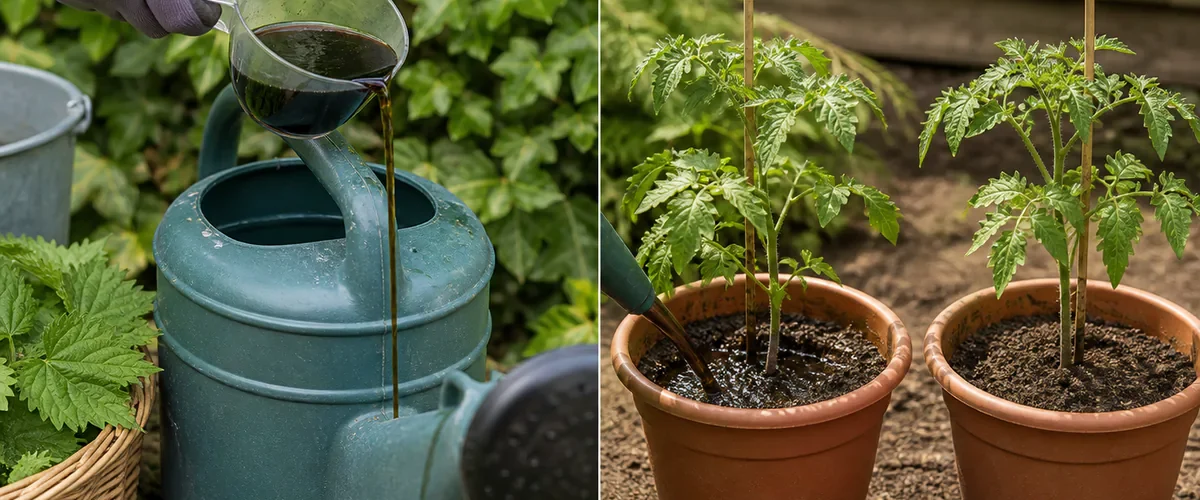
A bucket of nettles and rainwater can turn dark, bubbly, and fiercely scented. Gardeners often call the liquid their strongest free fertilizer and pesticide. It does contain plant nutrients, but the concentration is unknown, the smell can upset neighbors, and strong liquid can scorch roots or leaves. The safest recipe begins with restraint.
Know What Nettle Liquid Really Is
Nettle steep is decomposed plant material in water. Its nutrient content changes with the nettles, water, temperature, time, and oxygen. It is not a balanced or tested fertilizer. It may supplement good soil during leafy growth, but it cannot replace a soil test or a complete feed when a crop has a known need.
Claims that it cures every pest and disease are also too broad. A strong-smelling liquid may discourage an insect briefly, yet it can damage foliage and beneficial organisms. Identify the problem before treating it.
Harvest Nettles Without Bringing Trouble Home
Wear thick gloves, long sleeves, closed shoes, and eye protection. Collect young growth before mature seeds form. Confirm the plant carefully and avoid roadsides, sprayed land, polluted water, protected areas, and property where you lack permission.
Leave enough nettles for wildlife and regrowth. Do not use diseased material or plants contaminated with herbicide. A municipal green-waste or compost system is a better destination when identity or contamination is uncertain.
Prepare a Small Outdoor Batch
Use a nonfood plastic container with a loose cover. Metal may react with the brew. Place chopped nettles in the container and add nonchlorinated water to cover them, leaving space for foam. Weight floating material with a clean object.
Keep the bucket outdoors in shade, away from doors, drains, wells, ponds, children, and pets. Cover loosely so insects and animals stay out while gas can escape. Never seal fermenting liquid in a rigid airtight container because pressure can build.
Stir with a dedicated tool every day or two. Bubbling and odor increase as material breaks down. Depending on weather, the active stage may last one to three weeks. When bubbling slows, strain the liquid and compost the solids if they are seed-free and healthy.
Dilute Before It Reaches a Plant
Because homemade strength varies, begin very weak. One part finished nettle liquid to at least ten parts water is a common starting range for established plants, but there is no universal formula. Test one plant, apply to moist soil, and wait a week before deciding whether to repeat.
Do not pour concentrate against stems or onto dry roots. Avoid seedlings, stressed plants, recently transplanted roots, and dormant growth. Stop if leaf edges brown, soil smells sour, or fungus gnats increase.
Keep It Off Edible Leaves
Soil drenching reduces direct contact with food compared with spraying foliage. Do not apply decomposing homemade liquid to lettuce, herbs, or fruit near harvest. Wash garden produce under running water and follow local food-garden guidance.
Use clean tools and wash hands. Nettle brew is not made under controlled sanitation conditions and should never be tasted, stored in drink bottles, or used around broken skin.
Why It Is Not a Complete Fertilizer
Leafy nettles may contribute nitrogen and potassium, but the final dose is unknown. Flowering and fruiting plants need nutrients in correct relationships. Too much nitrogen can produce soft leaves with fewer flowers and greater pest pressure.
Start with compost, correct pH, steady water, and crop-specific nutrition. If a container plant needs feeding, a labeled fertilizer provides a measurable rate. Treat nettle liquid as an optional experiment, not the foundation of plant care.
Do Not Call It a Proven Pesticide
For aphids, begin with plain water and support natural predators. For fungal symptoms, identify the disease and improve airflow and watering. A fermented spray can spread material between leaves, irritate skin, and burn tissue in sun.
Never mix nettle brew with bleach, vinegar, pesticides, or household cleaners. Do not pour leftovers into storm drains or natural water. Dilute and use responsibly on suitable soil, or ask local waste authorities how to dispose of a large failed batch.
The Honest Nettle Garden Trick
Clean the strainer and bucket after use. Wear gloves and rinse dedicated tools over suitable soil, not beside a drain or stream. Store any remaining liquid only briefly in a labeled outdoor container. If it leaks, fills with larvae, or develops unusual colored growth, treat the batch as failed and seek local disposal advice.
Make less than you think you need, keep it outdoors, dilute heavily, and compare one treated plant with an untreated match. Record dates and results. If growth does not improve, stop rather than increasing strength.
The bucket can turn a common plant into a useful garden input, but it is not magic. Careful harvesting, safe fermentation, measured testing, and ordinary soil care are what make the experiment worth trying.
Start very small.