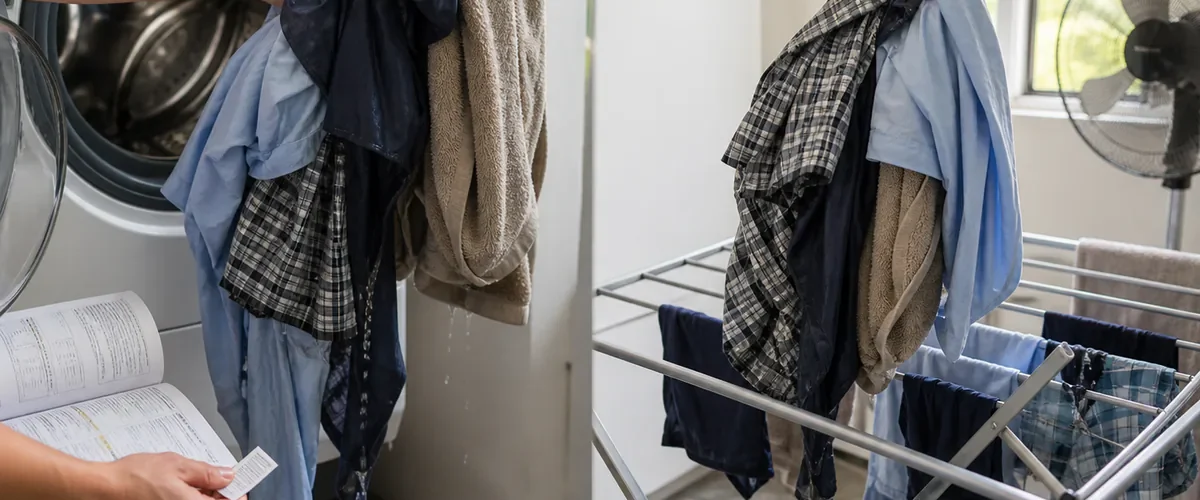
The wash cycle ended, but the shirts still felt heavy with water. One extra setting changed that: the spin cycle removed more moisture, and the clothes reached the drying rack noticeably lighter. The washer had not dried them. It had shortened the job that came next.
A standard washing machine has no hidden heated drying function. An extra spin can extract water when the fabric, load, and appliance allow it. Used correctly, this simple step can reduce air-drying time without pretending the drum is a dryer.
Read the Care Labels Before Spinning Again
High spin speeds suit sturdy cotton towels and some everyday clothes. Wool, silk, bras, delicate knits, and items with fragile trims may stretch, crease, or lose shape. Follow each garment label and choose the washer cycle designed for the most delicate item in the load.
Check the appliance manual too. It explains maximum load, spin choices, and what to do when the machine reports an imbalance. Never force the door open or restart a cycle that ended with an error.
Balance the Load Before the Extra Spin
Untangle sleeves and sheets. Spread items around the drum rather than leaving one heavy lump. A single bath mat, blanket, or saturated jacket can pull the drum off balance.
If the washer knocks, walks, or stops, cancel the cycle and redistribute the load after the door safely unlocks. Do not hold the machine in place while it spins. Persistent vibration needs leveling or service.
Choose Spin, Not a Second Full Wash
Select the spin-only or drain-and-spin program named in the manual. Use a speed safe for the fabrics. The drum removes liquid through centrifugal force; it does not evaporate water with hot air.
When the cycle ends, take clothes out at once. Shake each item to release folds and hang it with space around the fabric.
Test the Difference With One Load
Weigh or simply feel two similar loads after their normal final spin. Give one a permitted extra spin and record how long each takes to dry in the same room. The comparison shows whether the extra electricity and fabric wear are worthwhile for your machine.
Very high speeds can leave deep wrinkles and stress elastic fibers. Choose the lowest speed that removes enough water for the situation. A longer drying time may be the gentler option for favorite clothes.
Should You Add a Dry Towel?
A common trick adds one thick dry towel to absorb water during the spin. It may help some small loads, but it also changes weight and balance. A large wet towel can become the heaviest item in the drum.
Use the towel method only if the washer manual permits it and the load remains within capacity. Choose a clean colorfast towel that will not shed lint. Stop immediately if the machine thumps or shows an imbalance.
Finish With Safe Air Drying
Place the rack in a ventilated room. Open a window when weather allows, use an extractor, or run a dehumidifier according to its instructions. A fan can move air across the clothing without touching it.
Leave space between garments and turn thick items partway through. Hang shirts on suitable hangers and lay heavy knits flat so they do not stretch. Do not crowd wet laundry in a closed bedroom because the released moisture can support condensation and mold.
Keep Wet Clothes Away From Heat Hazards
Do not drape clothing directly over a radiator, heater, stove, or fireplace. Keep the drying rack at the clearance required by the heat source. Never cover an electric heater or block a vent.
A hair dryer is not a hands-free clothes dryer. Holding it too close can scorch fabric, overheat the appliance, and create danger near water. Never leave one running unattended or push it inside a garment.
Why Clothes Leave the Washer Too Wet
- The selected cycle uses a low final spin
- The load is overloaded or badly unbalanced
- A drain hose or pump filter is restricted
- The fabric naturally holds large amounts of water
- The washer stopped before the final spin
Clean an owner-accessible filter only as the manual directs and prepare for trapped water. Repeated slow draining, error codes, burning smells, or violent movement need service.
Check that the drain hose is not kinked or pushed too far into its standpipe. Do not dismantle a pump or reach into the machine while it is connected to power. A washer that cannot drain fully will not improve with repeated high-speed commands.
Use the Shortcut Where It Matters
An extra spin uses energy, so reserve it for weather, space, or fabric loads that truly need help. Compare drying time with and without the step. A well-spaced rack in moving air may already be enough.
Your washer cannot secretly become a heated dryer, but the spin setting can remove the water that makes drying slow. Match the speed to the care label, balance the load, and finish in ventilated air. The shortcut is useful precisely because it makes a modest, honest promise.