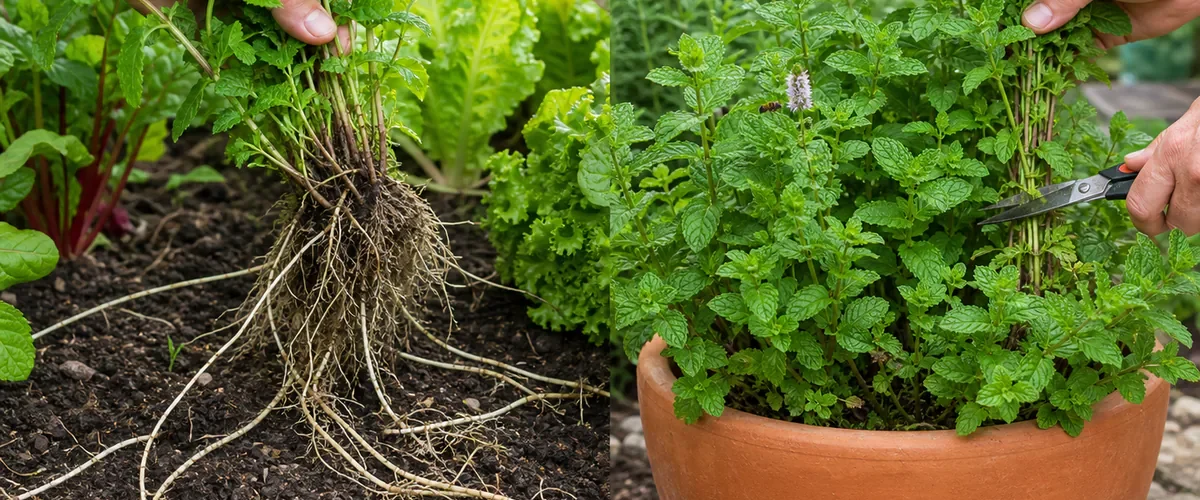
A tiny mint plant looks harmless beside a tomato. By midsummer, runners have crossed the bed and shoots are appearing where no herb was planted. That fast growth is one reason mint is rewarding, and exactly why the pot matters.
Grow it in a wide container and you can harvest fresh leaves, support pollinators, and test different flavors without surrendering the garden. The benefits are practical; mint is not a cure for cancer, asthma, infections, or every other condition claimed online.
Choose a Mint You Will Use
Spearmint has a familiar sweet flavor for salads, sauces, and cold drinks. Peppermint contains more menthol and suits teas and desserts. Apple, chocolate, orange, and other named mints offer different aromas.
Buy a labeled culinary plant from a reliable nursery. Mint species cross readily, so plants grown from collected seed may not taste like the parent.
Do not harvest an unidentified mint-like wild plant for food. The square stems and opposite leaves of the mint family are clues, not complete identification.
Give the Roots a Wide Pot
Select a container about 12 to 16 inches wide for one young plant, with open drainage holes. Mint spreads sideways through underground stems, so width is useful.
Fill it with a quality potting mix that holds even moisture while draining freely. Do not use dense garden soil in a container.
A pot placed on bare soil can still let roots escape through drainage holes. Set it on a hard surface or saucer that is emptied after watering, and inspect beneath it.
Start With Roots, Not One Leaf
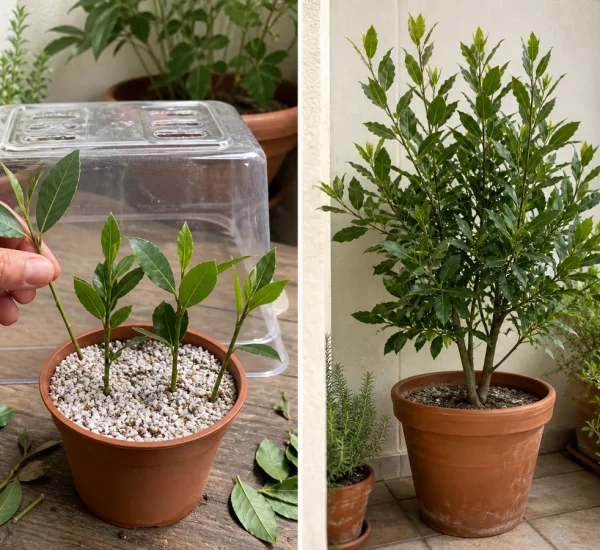
A single leaf placed in soil is not the reliable method promised by some guides. Plant a rooted nursery start, divide an established clump, or root a healthy stem cutting with nodes.
For a cutting, take a nonflowering tip with several nodes using clean shears. Remove lower leaves and place the nodes in clean water or a suitable propagation mix. Pot it once a healthy root system develops.
Keep new plants separate until you have checked for pests and disease.
Use Morning Sun and Afternoon Relief
Mint grows in full sun when moisture is steady, but it often appreciates afternoon shade in hot climates. Too little light creates long weak stems; fierce heat can scorch leaves and dry the pot quickly.
Move a nursery plant gradually into stronger light. Rotate containers for even growth and provide airflow without placing them in constant drying wind.
Keep Moisture Steady
Water when the surface begins to dry. Soak the whole root ball until water drains, then empty the saucer.
Do not maintain swampy soil. Yellow leaves, sour-smelling mix, and black roots indicate too much water or blocked drainage. Crispy tips and wilting in a light pot suggest drought.
A thin organic mulch can slow evaporation outdoors, but keep it away from stems and watch for slugs.
Harvest to Make It Bushier
Once the plant is established, pinch stem tips just above a leaf pair. This encourages side branches and a fuller pot.
Harvest no more than about one-third at a time so enough foliage remains for recovery. Cut in the morning after dew dries for clean, aromatic leaves.
Wash culinary mint under running water and refrigerate it promptly. Do not use leaves treated with a product not labeled for edible crops.
Control Flowers and Runners
Mint flowers feed bees and other pollinators, so allowing some bloom can benefit a garden. Flowering may reduce tender leaf production, and seed can create unwanted plants.
Pinch most buds for continued leafy harvest or designate one pot for flowers. Cut escaped runners and never dump root-filled potting mix into natural areas.
Divide Before the Center Declines
A crowded mint pot becomes root-bound and may thin in the middle. In spring or another mild growing period, lift the clump, cut healthy outer sections, and repot them in fresh mix.
Discard diseased roots and clean the container. Sharing labeled divisions is an easy way to give away a useful herb without spreading unknown weeds.
Use Mint as Food, Not Treatment
Fresh mint adds flavor to water, grain salads, yogurt sauces, fruit, peas, soups, and tea. Aroma may feel refreshing, and peppermint products can have specific evidence-based uses.
That does not mean rubbing leaves on gums, skin, or the chest treats disease. Concentrated peppermint oil can irritate or be unsafe when swallowed. Health concerns, pregnancy, medicines, and use in children require qualified advice.
The Pot Turns Fast Growth Into a Gift
Mint earns its space through flavor, fragrance, easy propagation, quick recovery after harvest, and flowers that can support insects. Its same energetic roots can become a garden problem.
Choose a wide draining container, harvest often, and divide the clump before it chokes itself. Once you see how far one runner wants to travel, the pot will feel like the smartest part of the entire planting plan.