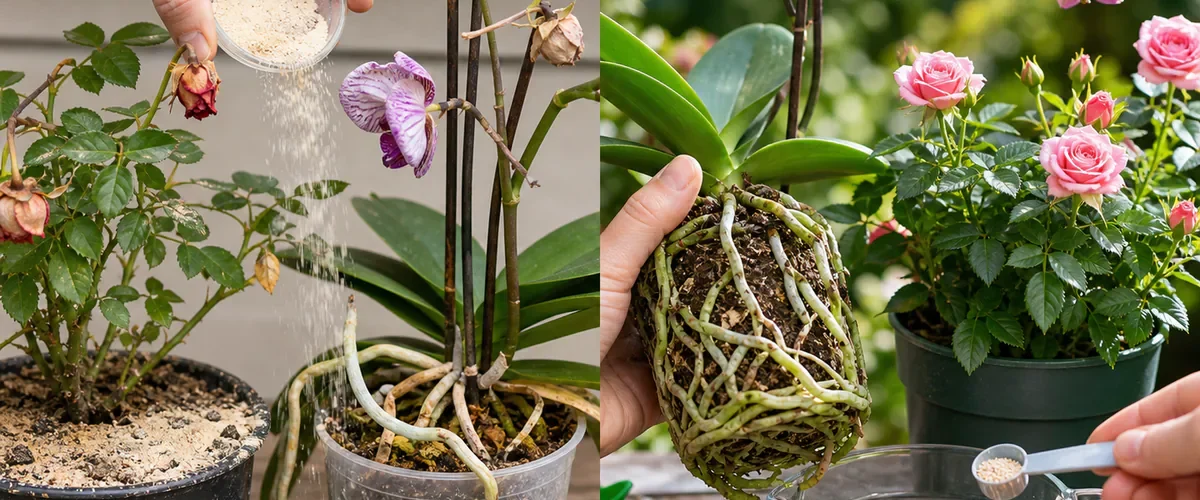
One spoonful of garlic powder disappears across the potting mix, carrying a huge promise: stronger roots, fewer insects, and more flowers through winter. Garlic feels powerful because its smell is powerful.
Smell is not a fertilizer analysis. Culinary garlic powder provides no measured balance of nitrogen, phosphorus, potassium, and micronutrients. It can cake on wet soil, feed mold, irritate roots, and contain salt or additives. Flowering starts with the plant’s real needs, not a seasoning jar.
Read the Garlic Label First
Pure dried garlic and garlic salt are not the same product. Blends may contain sodium, anti-caking agents, oil, flavoring, or other seasonings that do not belong in a pot.
Even pure powder varies in particle size and composition. A teaspoon gives no useful nutrient dose for a rose, orchid, or any other plant.
Keep kitchen seasonings for food. Do not sprinkle an unknown product over every container and hope different roots react alike.
Garlic Is Not a Complete Fertilizer
Plants need several nutrients in suitable ratios. Garlic contains minerals, but those are locked inside dried plant material and are not delivered like a formulated feed.
Decomposition must happen first. In a small pot, microbes breaking down powder use oxygen and may create a damp crust. The amount released is unknown and unlikely to match the plant’s full requirements.
Vitamins important in human food do not become special flower fuel when poured into soil.
Do Not Rub Garlic Water on Leaves
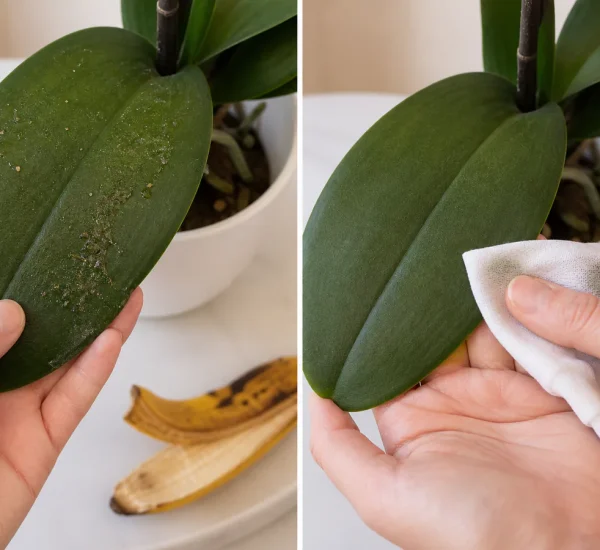
Garlic extracts can mark or burn foliage, especially when concentrated, combined with oil or soap, or applied in sun. Orchid leaves and crowns are particularly poor places for wet food residue.
A cotton swab does not make the mixture safe. Leaf pores, tender tissue, and beneficial microbes can still be affected.
If garlic is tested for a confirmed soft-bodied pest, use a mild strained recipe, patch-test for 24 to 48 hours, avoid flowers, and stop if spotting appears. Pest control and fertilizing are different tasks.
Choose Nutrition for the Plant
Use a complete fertilizer labeled for the plant and growing system. Roses in garden soil, roses in containers, and epiphytic orchids do not share one feeding schedule.
Follow the package rate during active growth. More fertilizer can burn roots and push soft leaves instead of blooms. Do not add garlic powder on top of a normal feeding program.
Test garden soil before correcting a suspected deficiency. In containers, periodically flush mineral salts if appropriate for the plant and water quality.
Make Light the First Flower Test
Many roses need abundant direct sun. A shaded rose may make long leafy stems and few buds no matter what is added to its roots.
Most common indoor orchids prefer bright filtered light. A dark corner keeps them alive but often prevents flowering. Move plants gradually so leaves are not scorched.
Identify the species before choosing exposure. “Flowering plant” is not one light category.
Water According to Roots
Garlic powder does not protect a waterlogged pot from rot. Use drainage holes and a medium suited to the plant.
Water thoroughly when the root zone needs it, then let excess escape. Do not maintain a constantly wet garlic layer on the surface.
For orchids, keep water out of the crown and preserve air around roots. For roses, avoid repeated shallow sips that leave deeper roots dry.
Respect Winter Rest
Cold, short days naturally slow many plants. Outdoor roses may become dormant. Some orchids flower after a seasonal temperature pattern, while others are growing leaves or roots.
Forcing heavy fertilizer during low light creates weak growth and salt buildup. Adjust care to the plant’s season instead of promising flowers during every rainy week.
Deal With Insects Directly
Identify aphids, mites, scale, mealybugs, or fungus gnats before treatment. Hand removal, water rinsing, sanitation, and beneficial insects may solve small outbreaks.
For larger problems, use a product labeled for the pest and plant. Follow coverage, repeat timing, temperature, and edible-crop restrictions.
Garlic odor may alter insect behavior briefly, but it does not create a protective barrier that replaces monitoring.
Compost Garlic Scraps Instead
Fresh garlic skins and spoiled unseasoned cloves can enter a managed compost system in modest amounts. Balance them with dry material and wait until the ingredients become stable, earthy compost.
Use mature compost where it suits the soil. General compost still does not belong in airy orchid bark.
Keep a short plant log with watering, feeding, and new growth dates. It will show whether a change helped and stop one recent spoonful from receiving credit for a flower spike that began developing weeks earlier.
The One Spoonful Is a Distraction
Garlic powder can smell like action while the real problem remains: low light, wrong watering, compacted roots, winter dormancy, or unbalanced nutrition.
Put the seasoning back in the kitchen. Diagnose the plant, feed with a known formula, and follow its natural flowering cycle. More flowers come from a complete routine, not a spoonful that every pot must somehow interpret.