The orchid had no leaves, but one firm green strip remained at the base and several roots were still alive. That small piece of tissue changed the decision. The plant was not guaranteed to return, yet it still had a place from which new growth might begin.
A leafless orchid can recover only if viable crown, stem, or growing tissue and useful roots remain. A completely rotten crown and dead roots cannot be revived by cinnamon, charcoal, or an overnight soak. Inspect first, remove decay carefully, and build a stable recovery environment.
Decide Whether the Orchid Is Still Alive
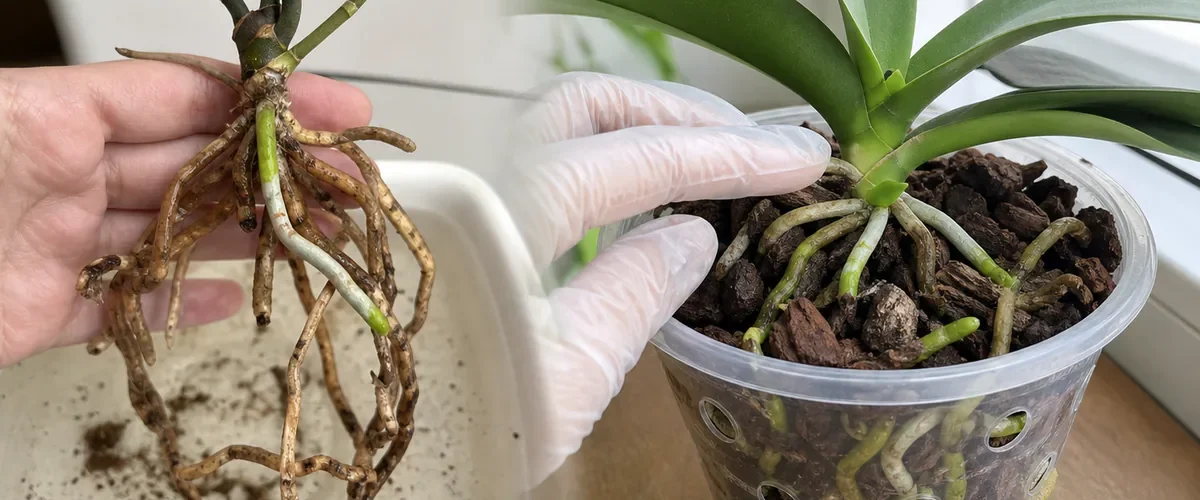
Unpot the orchid over a clean surface. Firm roots are useful even when they look silver; many turn green when wet. Dead roots are hollow, papery, black, or mushy, and their outer layer may slide away.
Check the crown and stem. Firm green or pale living tissue offers hope. A soft black center with a foul smell and no firm growth point is a poor sign. Some orchids can produce a basal shoot, but recovery may take months and is never certain.
Quarantine Before the Rescue Begins
Keep the leafless orchid away from healthy plants while you inspect it. Wash your hands, use a separate tray, and disinfect tools between plants. Check the old pot and medium for snails, mealybugs, scale, and mold before discarding them in a sealed bag.
Do not reuse bark. A pot can be cleaned and disinfected only with a method safe for its material, then rinsed and dried. Quarantine reduces the chance that a hopeful rescue spreads a pest or pathogen through the collection.
Remove Only Tissue That Is Truly Dead
Disinfect scissors or pruners before each cut. Trim mushy roots back to firm tissue. Do not shorten healthy roots simply to fit a small pot. Remove loose rotten material without carving deeply into the crown.
Clean the tool between cuts so decay is not moved into healthy tissue. Bag discarded material and wash the work surface.
Be Careful With Cinnamon and Charcoal
Cinnamon is often called a natural orchid disinfectant, but it can dry living roots. Do not coat the root system or pack powder into the crown. Activated charcoal is not a cure for established rot.
If a cut needs treatment, follow guidance for the orchid type and diagnosis. Spreading kitchen powders over every wound can hide continuing damage and slow new roots. A local orchid society or extension service can help when disease is unclear.
Skip the Overnight Water Bath
A long soak deprives damaged roots of air and can keep crown tissue wet. Instead, rinse debris away briefly if needed, let cuts dry under gentle airflow, and pot the orchid in a clean airy medium.
Choose a transparent pot with drainage and ventilation holes. Use fresh orchid bark or another medium suited to the species. A slightly snug pot dries more predictably than an oversized container full of wet mix.
Create Humidity Without Sealing in Rot
A weak orchid with few roots benefits from moderate humidity and air movement. Place it in bright indirect light away from hot sun. Keep the room warm enough for the species and avoid heating or cooling blasts.
A humidity tent can trap disease if there is no ventilation. If experienced guidance recommends one, keep the plant from touching plastic, open it regularly, and stop if condensation sits on the crown or mold appears.
Water the Remaining Roots, Not the Empty Crown
Water when the medium approaches the dryness appropriate for the orchid, then drain fully. Keep water out of the leafless crown. Blot accidental pools with clean paper.
Do not fertilize immediately after severe root loss. Salts can burn damaged roots. Wait for an active new root tip or shoot, then begin a labeled orchid fertilizer at a gentle rate.
Watch for the First Honest Recovery Signs
- A firm green root tip begins to lengthen
- The base remains solid instead of spreading black
- A tiny basal growth or new crown point appears
- The pot dries gradually without a sour smell
- No fresh fuzzy mold develops
Photograph the plant weekly rather than handling it each day. New orchid growth is slow, and constant unpotting damages tender root tips.
Label the pot with the rescue date and note each watering. If the medium stays wet much longer than expected, increase air movement or adjust the potting setup instead of adding more holes while roots are inside. Do not mist the crown to make the plant look hydrated.
When Letting Go Is Safer
Discard the orchid if all roots and crown tissue are soft or dead, decay continues despite removal, or disease threatens nearby plants. Isolate it during the decision and disinfect reusable pots before another plant enters them.
A leafless orchid is not saved by the drama of an overnight bath. It returns only when living tissue remains and receives air, careful moisture, warmth, and time. Find that firm green point, protect it from more rot, and let the next root or shoot decide the story.