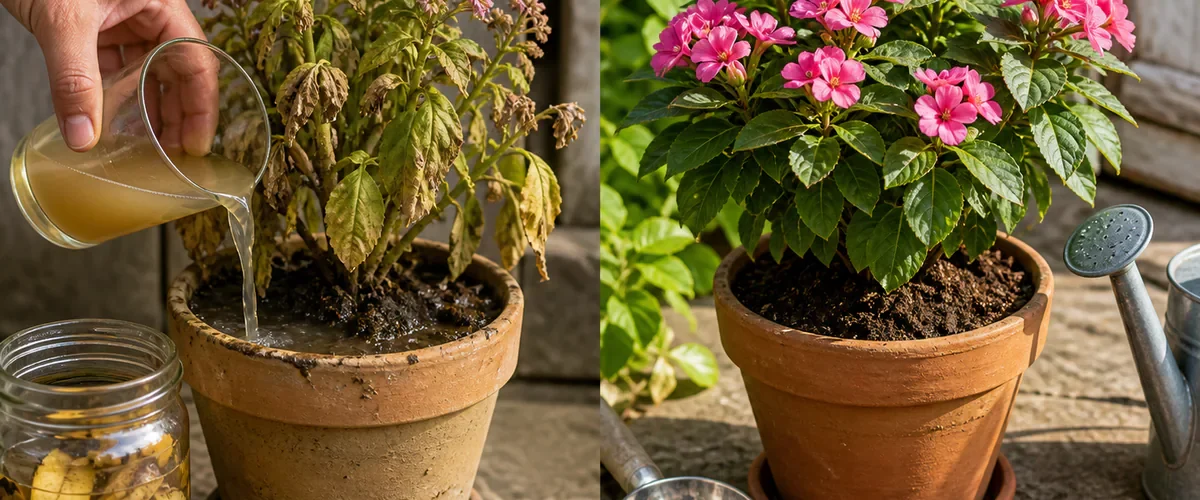
A jar of banana-peel water turned amber on the windowsill. One cup a month promised flowers in every season. But the first plant received the liquid while its roots sat in soggy soil, and no amount of potassium could replace the missing air.
Banana peels contain plant nutrients, yet a homemade soak has no measured analysis or guaranteed balance. Flowers need healthy roots, suitable light, correct water, and species-specific nutrition. The safest place for banana peels is usually a managed compost system, where they become part of a balanced soil amendment.
Why the Monthly Cup Is Impossible to Measure
Bananas vary in size, growing conditions, and ripeness. Soaking one peel in water does not tell you how much potassium, phosphorus, nitrogen, or salt reaches the cup. Many nutrients remain in the solid peel, while the liquid can grow microbes and smell.
A cup is also not one plant dose. It may flood a small succulent and barely wet a large container. Applying it by the calendar can overwater a pot that is still damp.
Check the Root Zone Before Feeding
Push a finger or wooden skewer into the mix. Smell the drainage hole. Lift the pot. Healthy roots need moisture and oxygen; sour odor, slow drying, fungus gnats, and mushy tissue point to excess water or decaying material.
Make sure the container has open drainage. Empty decorative covers and saucers. If the mix has collapsed into a dense mass, repot at the correct season with a medium made for the plant.
Fertilizer cannot repair dead roots. Restore drainage and correct watering first.
Use Banana Peels Through Compost
Cut peels into pieces and mix them into an active compost pile or worm bin with dry carbon-rich material. Bury the scraps inside the pile so they do not attract flies. Maintain the moisture and airflow needed by that system.
Use finished compost only when it looks dark and crumbly and no longer resembles food scraps. Mix a suitable amount into garden soil or potting medium rather than piling it against stems. Container plants usually need far less compost than an outdoor bed.
Do not bury fresh peels in a small indoor pot. Decomposition can consume oxygen, hold water, attract pests, and create uneven pockets around roots.
Choose a Fertilizer With a Label
When a plant needs feeding, select a complete product labeled for the species or use. The label gives the nutrient analysis, mixing rate, frequency, and safety directions. Apply it during active growth to moist soil, and never make it stronger to force flowers.
Outdoor beds may benefit from a soil test. Extra potassium cannot correct low nitrogen, wrong pH, poor drainage, or shade. Too much of one nutrient can interfere with another.
Light Often Unlocks More Flowers Than Food
A flowering plant in deep shade may grow leaves but set few buds. Learn its light requirement and move it gradually. Direct sun can scorch a shade-grown plant, while a north corner may never supply enough energy.
Notice stem length, leaf color, and the direction of new growth. A plant stretching toward a window is asking for light, not peel tea.
Water for the Species, Not the Month
Succulents may need the mix to dry deeply. Tropical flowers may prefer more even moisture. Garden roses need deep root-zone watering, while orchids grow in airy bark. One monthly cup cannot suit them all.
Water until the intended root zone is wet and drain the excess. Then wait for the plant’s real drying signal. Feeding should fit inside that watering routine, not add an extra soaking.
Mistakes That Turn Scraps Into Trouble
- Fermenting peels in a sealed jar and guessing the dilution
- Burying fresh fruit waste in an indoor pot
- Using the same cup on every plant
- Feeding roots that are already rotten or dry
- Expecting fertilizer to replace light and seasonal rest
Run a Safer Plant Check Each Month
Inspect roots, drainage, light, pests, new growth, and old flowers. Record when you fed and how much. If the plant is actively growing and its label-based schedule says it is time, apply the measured fertilizer. Otherwise, leave the pot alone.
Let the Leaves Tell You What Is Missing
Yellow leaves do not automatically mean hunger. An old lower leaf may fade naturally, while many yellow leaves in wet soil can point to damaged roots. Pale new growth can have a different cause from brown, crisp edges. Look at the whole plant before reaching for any mixture.
If several plants in one bed show the same weak growth, a soil test can be more useful than another homemade feed. It can reveal pH problems and nutrient levels that roots can actually use. In a pot, check the drainage hole and root smell first. Correcting air and moisture often creates a faster, safer change than adding a rich liquid.
The banana cup promises an instant garden, but flowers begin with working roots. Compost the peel, correct the growing conditions, and feed with a known analysis only when needed. The result is less mysterious and far more likely to last beyond one bright flush.