The final orchid flower dropped, leaving a green spike and a pot of leaves. It looked like the show was over. In reality, the plant had entered the quiet phase when roots and leaves gather the energy for the next bloom.
Most common Phalaenopsis orchids do not flower without pause. Many bloom about once a year, though their flowers can last for months. Reblooming comes from healthy growth, suitable light, careful watering, gentle nutrition, and the right temperature signal.
Read the Flower Spike Before Cutting
If the spike is brown and dry, cut it near the base with a clean tool. It will not become green again. If it remains green, a healthy plant may produce a side branch from a node, though that smaller display uses stored energy.
A weak orchid may benefit from having the green spike removed so it can focus on roots and leaves. The correct choice depends on plant health, species, and your goal. Never cut into the crown.
Look for the Growth That Comes Before Flowers
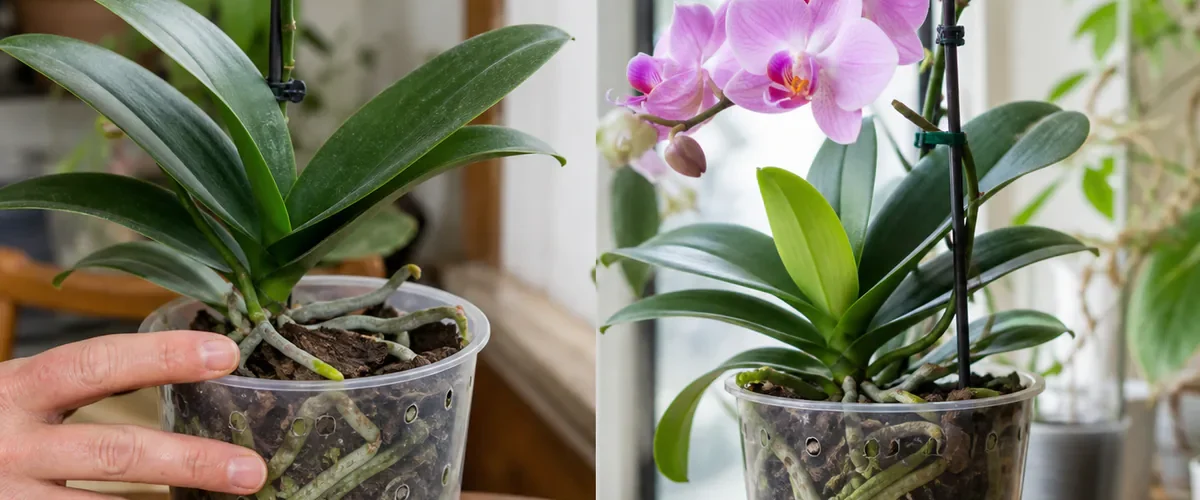
Healthy roots are firm and often silver when dry, turning green when wet. Fresh tips look smooth and bright green or reddish. A new leaf should expand firm and approach the size of older leaves.
A flower spike usually begins between leaves with a flatter, mitten-like tip. A new root is rounder and glossy. Do not bend either one while checking.
Give the Orchid Brighter Indirect Light
A moth orchid can stay alive in dim light without having enough energy to flower. Place it near an east or west window with bright indirect light. A sheer curtain can soften hard afternoon sun.
Very dark green leaves and no spike may suggest low light. Hot yellow patches can signal sunburn. Change exposure gradually and keep foliage away from hot glass.
Water by Roots and Bark
Lift the pot, feel the bark, and watch root color. Water thoroughly when the medium is ready, then drain every excess drop. Do not leave the inner pot standing in a decorative cover full of water.
Keep water out of the crown. Blot accidental pools with clean paper. A weekly schedule may be too frequent in winter and too slow in a warm bright room.
Feed the Growth, Not the Empty Calendar
Use a water-soluble houseplant or orchid fertilizer at the product’s rate. Many orchid guides use a reduced strength once or twice a month, but the label and plant response should lead.
Apply to moist roots during active growth. Flush periodically with plain water to limit salt buildup. White crust and burned root tips mean it is time to stop and review the dose.
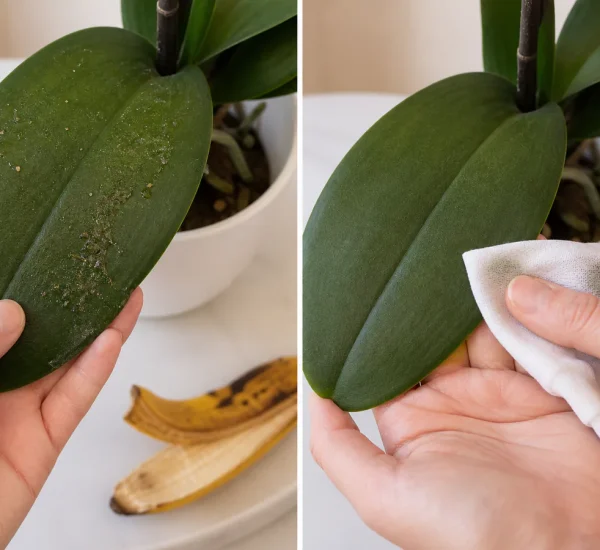
Skip coffee grounds, eggshell powder, banana tea, and Epsom salt recipes. They do not provide a measured complete diet and can leave residue in airy bark.
Use a Gentle Night Temperature Change
Many Phalaenopsis form spikes after a period of slightly cooler nights. A healthy plant near a safe window may experience that natural difference. Avoid cold drafts and temperatures below the range suitable for the orchid.
Do not move the plant outdoors suddenly. If it spends time outside, acclimate it to filtered light and bring it in before nights become too cool.
Repot Only When the Roots Need It
Replace bark that has broken down, stays wet too long, or smells sour. Use a ventilated orchid pot and fresh medium. Trim only dead hollow or mushy roots with clean scissors.
Repotting immediately before bud opening can cause stress. The period after flowering or when new roots begin is often easier, depending on species.
Common Reasons the Next Spike Stalls
- Light is bright enough for leaves but not flowers
- Roots stay wet inside old compacted bark
- Fertilizer salts burn active tips
- The plant is too weak after a long display
- Temperature never changes between day and night
Protect the Buds When They Arrive
Support the spike loosely and avoid turning the pot once buds face the light. Keep water, temperature, and humidity steady. Cold shocks and severe drying can cause buds to drop before opening.
Know a Root From a Flower Spike
A new root usually has a rounded, shiny green tip and may wander over the bark. A Phalaenopsis spike often begins flatter, like a tiny mitten, between the leaves. Both are good signs. Do not bend or cut either one while trying to decide what it is.
Take a photo every two weeks from the same angle. Slow changes become easier to see, and the record keeps you from adding extra water or fertilizer because nothing appeared to happen overnight. Orchid growth is measured in weeks, not mornings.
Your orchid is not finished when its last flower falls. The quiet roots and new leaf are already building the next display. Care for that invisible work, and reblooming becomes a patient cycle rather than a trick the plant must perform on command.