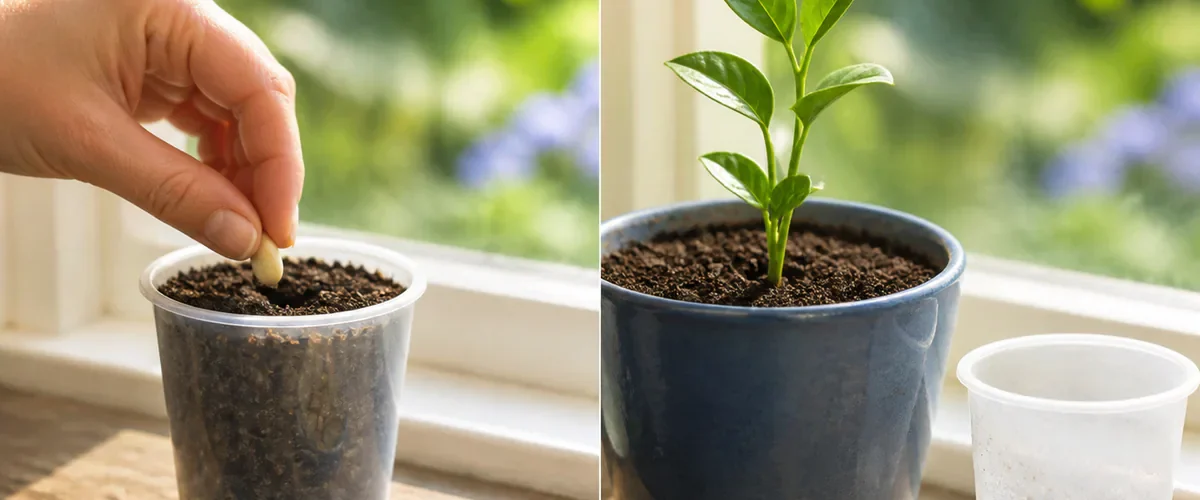
A lemon seed can wake inside an ordinary cup, push up two glossy leaves, and perfume your fingers when you gently rub mature foliage. What it cannot do is remain a tiny windowsill tree forever. The cup is a nursery, not a permanent home, and knowing when to move the seedling is the step most viral guides leave out.
Begin With a Fresh Lemon Seed
Seeds taken from a fresh ripe lemon often germinate better before they dry. Rinse away every piece of sticky fruit. Plant several seeds because some may be immature or fail. A seed-grown lemon will be genetically different from its parent, so future fruit is not guaranteed to match the lemon you ate.
You do not need to peel the seed coat, which can damage the embryo. Citrus seed also does not need a winter in the refrigerator. It needs clean moisture, warmth, oxygen, and time.
Turn the Cup Into a Real Seed Pot
A decorative cup without drainage traps water and rots roots. Use a nursery cup with holes, or drill appropriate holes only if the material can be worked safely. Set it on a saucer and fill it with fresh, fine, well-draining potting mix.
Moisten the mix first. Plant each seed about half an inch deep and cover lightly. A small clear cover can slow drying, but open it daily and remove it after shoots appear. Label the planting date instead of digging every few days to look for roots.
Give It Warmth Before Strong Sun
Place the cup in a warm spot with bright indirect light. Many citrus seeds sprout in two to six weeks, though timing varies. Keep the mix evenly damp, never saturated. Water should leave the holes and the saucer should be emptied.
Once green shoots appear, increase light gradually. A very dim window creates thin, leaning stems. Sudden hot sun can burn leaves grown under a cover. Turn the cup regularly so growth stays balanced.
Thin Without Tearing the Best Seedling
If several seeds sprout together, wait until they have true leaves, then keep the strongest. Snip unwanted seedlings at mix level or separate them gently while small. Pulling a crowded stem can tear the roots of its neighbor.
The Moment the Cup Becomes Too Small
Transplant when roots reach drainage holes, the mix dries unusually fast, or the seedling has several true leaves and steady growth. Choose a pot only one size larger with open holes. A huge container remains wet around the tiny root ball and raises the risk of rot.
Water before moving, support the stem by its leaves or root ball, and keep the plant at the same depth. After repotting, return it to bright indirect light for a few days before increasing sun.
Care for a Young Lemon Tree
Citrus prefers strong light. An established seedling may need six or more hours of direct sun, introduced gradually. Indoors, the brightest window may still be insufficient during winter. A suitable grow light can help when used according to its directions.
Water when the upper inch of mix begins to dry. Soak thoroughly, drain, and wait. Small daily sips leave part of the root ball dry and can build mineral salts. Feed only during active growth with a citrus fertilizer at the labeled rate after roots are established.
Will It Fragrance the Whole House?
Lemon foliage has a citrus scent when touched or pruned, but a small seedling will not work like an air freshener. Flowers are strongly fragrant, yet a seed-grown indoor tree may take many years to bloom and may never flower without enough light and seasonal conditions.
Do not crush leaves repeatedly to force fragrance. Leaves power growth. Enjoy the light scent during normal care, and use clean culinary lemon peel for a home simmer when you want a stronger aroma.
Fruit Requires Patience and Space
Seed-grown citrus can take five to fifteen years or longer to fruit. It may become a large thorny tree. People who want predictable fruit sooner should choose a grafted variety suited to their climate and growing space.
Protect outdoor citrus from temperatures below its tolerance and harden an indoor plant gradually before summer outdoors. Inspect for scale, mites, and aphids before bringing it back inside.
The Tiny Tree Hidden in the Cup
Keep a record of germination, repotting, and feeding. Citrus reacts slowly, and notes prevent a second fertilizer dose when growth pauses normally. Wipe dusty leaves with water and a soft cloth. Do not polish foliage with oil or milk, because coatings can hold dust and interfere with the leaf surface.
The surprising result is not a cup overflowing with lemons. It is watching a cleaned seed become a real tree. Give it drainage, warmth, light, and a timely move into a larger pot. The cup begins the story; good care lets the lemon seedling continue it.