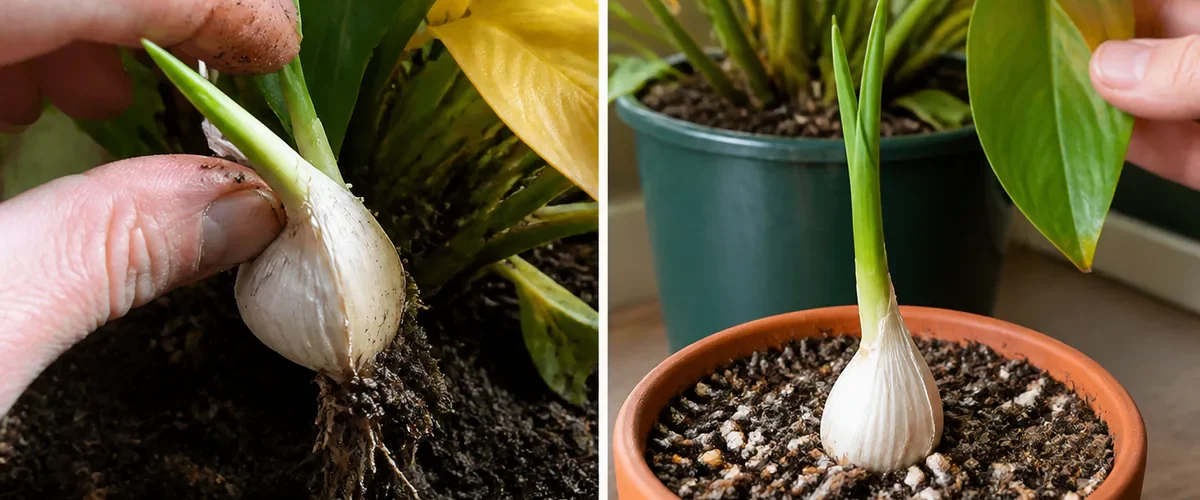
A garlic clove pushed into a flowerpot may sprout a bright green shoot within days. That visible change makes it look as if the houseplant received a secret treatment. In reality, you started another plant. The clove may compete for water, rot in wet mix, or do nothing to the pests already hiding under the leaves.
What Happens After You Bury Garlic
A healthy clove contains stored energy and a living bud. In suitable moisture and temperature, roots and a shoot emerge. The garlic does not release a complete fertilizer into the pot. It uses nutrients to build itself and then needs light, root space, and its own nutrition.
In a crowded houseplant container, garlic roots compete with the main plant. In constantly wet mix, the clove can soften and decay. That may attract fungus gnats or add odor rather than protecting anything.
Why Garlic Is Not Universal Pest Protection
Garlic contains strong sulfur compounds. Laboratory extracts and commercial products may affect certain pests, but a whole clove in soil does not create a measured protective cloud around every leaf. Aphids, mites, scale, and fungal diseases require different management.
A homemade garlic spray also changes strength with the recipe. Concentrate can burn leaves, irritate eyes and skin, and affect beneficial insects. It has no automatic harvest interval for edible plants.
Inspect the Plant Before Adding Anything
Look under leaves, along stems, and around the soil line. Sticky bumps may be scale; fine webbing can indicate mites; tiny flies near damp mix may be fungus gnats. Yellow leaves can result from overwatering, low light, cold, or root crowding rather than insects.
Isolate an infested houseplant. Photograph the problem and identify it with a trusted extension guide. Correct light and drainage first. A treatment chosen for the wrong pest wastes time while damage continues.
Use the Least Harmful Control
Rinse aphids and mites when the plant tolerates water. Wipe small scale colonies with a damp cloth or remove a badly infested stem. Let the upper mix dry appropriately between waterings to reduce fungus gnat breeding, and use clean sticky cards to monitor adults.
If more control is needed, select insecticidal soap, horticultural oil, or another product labeled for the exact plant and pest. Test a small area and follow temperature, repeat interval, protection, and harvest directions.
Grow the Garlic Separately Instead
If the sprouting clove interests you, give it a draining pot of its own. Use a disease-free clove sold for planting when possible. Plant the flat root end down and pointed end up, with the tip just beneath or near the surface according to local guidance.
Provide strong light and water when the upper mix begins to dry. A shallow indoor pot may produce garlic greens for cooking. A full bulb needs a deeper container, proper spacing, suitable seasonal temperatures, and patience.
Do Companion Plants Repel Pests?
Garlic grown near another crop may contribute diversity, but companion planting claims are often stronger than evidence. A nearby scent does not replace inspection, spacing, sanitation, resistant varieties, or targeted control.
In a garden bed, plan for both plants’ mature size. Do not crowd a shallow-rooted flower with dozens of cloves. Rotate edible alliums when soil diseases are a concern, and remove diseased bulbs rather than composting them.
Skip These Garlic Mistakes
Do not bury crushed garlic in an orchid pot, hydroponic reservoir, terrarium, or self-watering container. Decomposing food can reduce oxygen and support unwanted microbes. Never mix garlic with bleach, alcohol, essential oils, detergent, or unknown pesticides.
Keep cloves away from pets that may dig or chew them. Garlic can be harmful to dogs and cats. Store sprays and garden ingredients in labeled containers, never food or drink bottles.
The Secret the Sprout Reveals
Monitor a separate garlic pot for mold, pale shoots, or a soft base. Pale leaves usually need stronger light, while mushy tissue points to excess moisture or an unhealthy clove. Remove failed cloves promptly and replace mix that smells sour. Do not keep adding cloves to hide the problem.
When harvesting greens, cut only part of the leaves with clean scissors. Wash them under running water and use them promptly. Grocery cloves may be treated to slow sprouting and may carry disease, so seed garlic from a reputable supplier gives a more dependable crop.
The green shoot proves that garlic is alive, not that it cured the neighboring plant. Treat the houseplant by its real needs and grow the clove as a separate edible experiment.
When Professional Help Makes Sense
A valuable indoor tree covered in scale, a collection with recurring mites, or a plant showing rapid collapse may need expert diagnosis. A nursery, extension service, or licensed pest professional can separate insect injury from root disease and recommend a treatment suitable for the species and setting. That is safer than applying increasingly strong kitchen mixtures.
That approach gives both plants room and keeps pest control measurable. The most useful garlic trick is knowing whether you are planting a crop or treating a problem, because one clove cannot honestly do both jobs at once.