The cloudy water left after cooking potatoes looks like free plant food. It came from a vegetable rich in minerals, so pouring it over an orchid seems like an easy way to unlock stronger roots and more flowers.
Used carelessly, however, that “miracle” liquid can sour inside bark, attract tiny flies, and keep delicate roots wet. The useful part of the idea is smaller and safer: plain potato water may contain a little dissolved mineral, but it is not a complete orchid fertilizer.
If you want to test potato water for orchids, preparation and restraint decide whether the pot stays fresh or turns into a sticky mess.
What Potato Water Really Contains
Boiling potatoes releases starch and varying amounts of nutrients into the water. The exact mixture depends on the potato, peeling, water volume, and cooking time. That uncertainty makes it impossible to dose like a labeled fertilizer.
Orchids need nitrogen, phosphorus, potassium, and smaller nutrients in usable proportions. Potato water does not reliably supply all of them. It also has no guaranteed strength, so a dramatic bloom cannot honestly be promised.
Think of it as an occasional experiment, not the main feeding plan. A complete orchid fertilizer is still the predictable choice.
Never Use Salted or Seasoned Water
Only consider water from potatoes cooked without salt, oil, butter, milk, garlic, stock, or seasoning. Salt can damage orchid roots, while fats and food particles encourage odors and microbes.
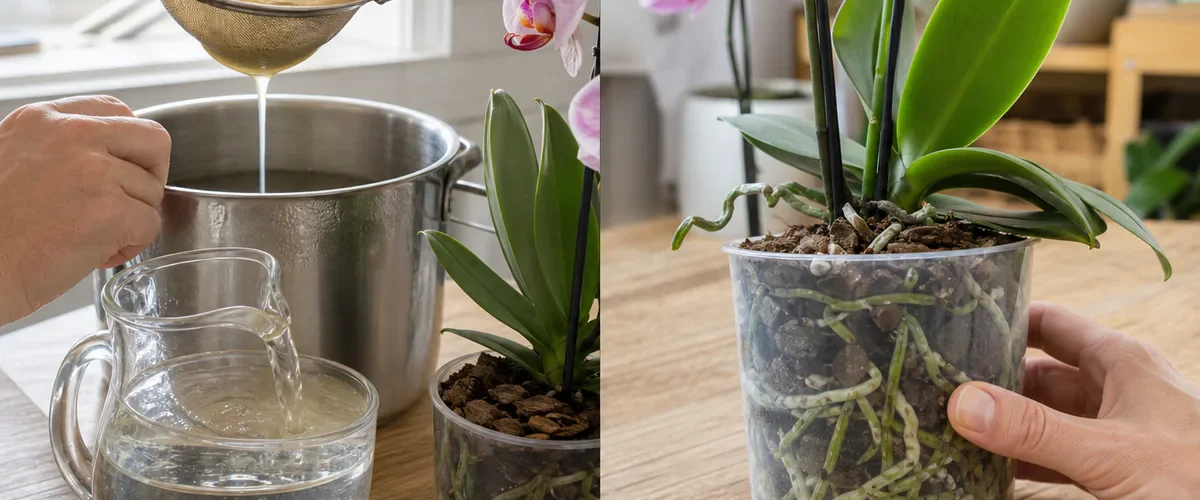
Let the water cool completely. Strain it through a fine cloth or coffee filter so bits of potato do not lodge in the bark. If it feels thick, slimy, or strongly cloudy, compost it or discard it rather than putting it in an indoor pot.
Fresh liquid is essential. Do not leave potato water at room temperature overnight. Refrigeration slows spoilage but does not make an old mixture ideal for orchids.
Try a Small Diluted Test
Start with one part fresh, unsalted potato water mixed with three or four parts plain water. Use it on one healthy, inexpensive orchid during active growth, not on your whole collection.
Water the bark thoroughly enough that liquid runs from the drainage holes. Never leave the pot standing in the runoff. Keep the crown and leaf joints dry, especially on Phalaenopsis orchids.
Then return to plain water for the next several waterings. If the bark smells fermented, develops a film, or stays wet longer than normal, flush it well and stop the experiment.
Do Not Put Potato Pieces in Orchid Bark
Chunks of peel and cooked potato break down quickly. In an outdoor compost pile, decay is useful. Inside an orchid pot, it consumes air, holds moisture, and creates food for fungus gnats and molds.
Orchid roots need open spaces around them. Bark, pumice, charcoal, or other species-appropriate materials maintain that air. Kitchen scraps collapse those spaces as they rot.
Compost peels separately, then use finished compost only where it suits the plant. Most epiphytic orchids should not be planted in ordinary garden compost.
A Better Way to Feed Orchids
Choose a complete fertilizer labeled for orchids or container plants. Follow the package rate and reduce the strength if the manufacturer recommends frequent feeding. Apply it to moist roots rather than a bone-dry pot.
Flush the pot with plain water from time to time to reduce salt buildup. White crust on bark or pot edges, blackened root tips, and slowed growth can signal excess fertilizer or hard-water minerals.
Feeding helps only when light, temperature, roots, and watering are already suitable. Fertilizer cannot repair a rotten root system or replace the seasonal conditions that trigger buds.
Watch the Roots, Not the Rumor
Healthy Phalaenopsis roots are firm. Wet roots often look green, while dry roots become silvery. Brown, hollow, or mushy roots need attention. New root tips and a fresh leaf are more useful signs than the color of a homemade liquid.
Check the pot by weight and the condition of the mix before watering. A fixed calendar can drown an orchid in a cool room and dehydrate it in a warm bright one.
Mistakes That Cancel Any Benefit
Do not combine potato water with banana peels, eggshell powder, coffee, sugar, or several fertilizers at once. A crowded recipe raises the risk of rot and makes it impossible to know what caused a problem.
Do not use the test on a newly repotted, diseased, rootless, or dormant orchid. Stabilize the plant first. Also stop if pets are attracted to the pot or if insects appear.
The Real “Gold” Is a Measured Routine
Plain potato water can be tested carefully, but it is neither stronger than water nor a guaranteed flower switch. Its composition changes every time you cook.
The dependable miracle is less dramatic: airy roots, bright indirect light, careful watering, and measured complete nutrition. If you try the kitchen leftover, dilute it, use it fresh, and let the orchid’s roots decide whether it deserves a second pour.