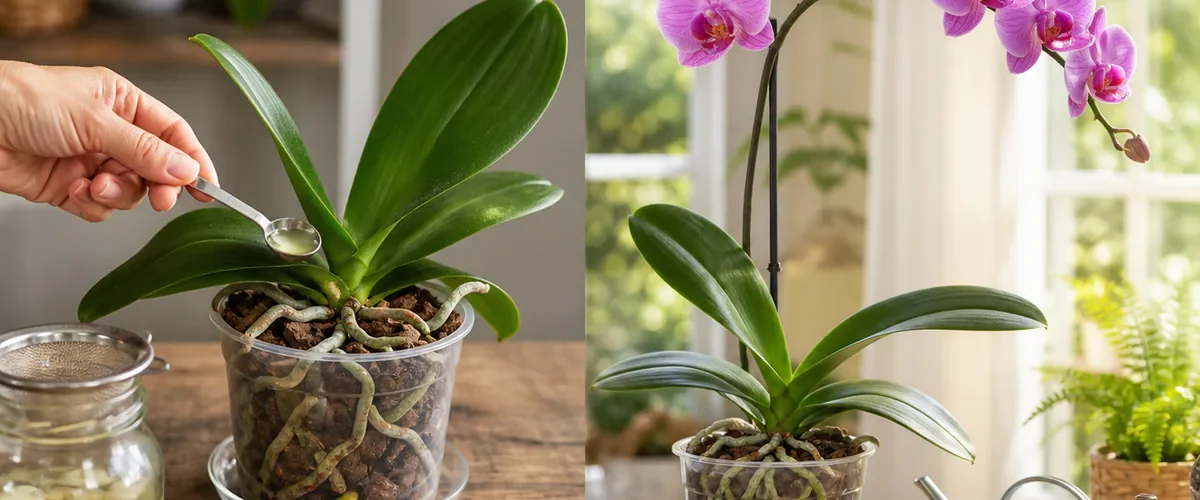
A jar of garlic water can make an ordinary orchid routine feel like a secret passed down through generations. The smell is powerful, the ingredient is natural, and online promises say the tonic can trigger an explosion of flowers. Garlic does contain active plant compounds, but an orchid does not bloom because one kitchen ingredient orders it to.
A mild garlic preparation may discourage a few pests in some situations, yet it is not a complete fertilizer or a guaranteed bloom trigger. The real transformation begins when the orchid receives the light, root health, temperature pattern, and nutrients its type requires.
Why Garlic Water Became a Famous Orchid Tonic
Crushed garlic releases sulfur-containing compounds with a strong odor and biological activity. That makes it easy to believe the water must protect roots, kill disease, and feed flowers at once. Small amounts of minerals in garlic are often used to support the claim.
But a clove steeped at home produces an unknown concentration. It does not provide a reliable balance of nitrogen, phosphorus, potassium, and micronutrients. A strong batch can irritate roots or leaves, while organic pieces left in the pot can rot or attract pests.
Do Not Use a Tonic on a Sick Root System
Before feeding anything, inspect the roots. Healthy Phalaenopsis roots feel firm and change from silver to green when watered. Mushy, hollow, or foul-smelling roots need a rescue from rot, not another soaking.
Remove standing water from the outer pot. Replace broken-down, dense medium with fresh orchid bark when needed. Keep the crown above the mix and use a container with open drainage. Without air, roots cannot support new flowers no matter what is in the water.
If You Test Garlic Water, Keep It Cautious
There is no standard home recipe proven for every orchid. If you choose to experiment, use a very mild, freshly strained preparation on one healthy plant, not the whole collection. Test it on a small root-area section and observe for damage before repeating.
Do not leave garlic pieces in the bark. Do not spray flowers or pour liquid into the crown. Stop if roots darken, leaves spot, the medium smells sour, or small flies appear. Keep the mixture and garlic away from pets; concentrated allium products can be harmful if animals consume them.
Discard leftovers instead of storing a fermenting jar. Wash the container, label every plant you test, and record the date so changes are not confused with ordinary seasonal growth.
Never combine the tonic with pesticides or household cleaners. If pests or disease are present, identify the problem and use a treatment labeled for orchids and that specific issue.
The Four-Part Bloom Trigger That Works Better
1. Brighter Filtered Light
Many orchids survive in a room that is too dark for flowering. Move the plant gradually closer to a bright window where it can see open sky. Use a sheer curtain against strong midday sun. New leaves should remain a healthy medium green rather than bleaching or burning.
2. A Gentle Nighttime Change
Common Phalaenopsis orchids often begin spikes after a period of slightly cooler nights, while days remain comfortable. Avoid cold drafts and extreme drops. Because orchid types differ, learn the plant’s name before trying to create a seasonal signal.
3. Complete, Measured Nutrition
Choose a complete orchid fertilizer and follow the label. Apply it to moist roots during active growth. More fertilizer does not create more blooms; excess salts damage root tips. Flush the pot with plain water as recommended for the product and your water quality.
4. A Wet-Dry Rhythm
Water thoroughly, let every drop drain, and wait until the medium approaches the dryness appropriate for that orchid before watering again. Do not use ice cubes as a universal schedule. Feel the pot, inspect the roots, and adjust for season and room temperature.
Mistakes That Delay the Flower Spike
Moving the orchid every few days prevents it from adapting to one useful location. Cutting every green flower stem immediately can remove a possible side spike on some Phalaenopsis, though weak plants may benefit from resting. Other orchid types bloom only from mature new growth and need different pruning.
Overpotting is another quiet problem. A large volume of wet bark dries slowly and can rot a small root system. Choose a snug ventilated pot and repot when the medium breaks down, not simply because flowering has paused.
What a Real Bloom Explosion Looks Like
A healthy orchid does not change overnight. First, firm root tips extend. Then a new leaf or mature growth stores energy. Finally, a flower spike appears when the plant reaches the right stage and receives the right signal.
Garlic water may be an interesting experiment, but it should never carry the whole promise. Build the conditions first. When the spike finally rises and fills with buds, the result can still feel miraculous, even though the true secret was patient care rather than one powerful-smelling ingredient.