A few drops of lemon juice can make an orchid leaf look cleaner and brighter. That quick shine is why the trick is often credited to professional florists and promised as a path to stronger leaves and more flowers. Yet lemon juice is an acid, not a complete orchid food, and the same drop that removes a mineral mark can damage tissue when it is too strong or left in the sun.
The safer florist secret is simpler: clean leaves gently, protect the crown, and build blooms through light, healthy roots, and measured nutrition.
What Lemon Juice Actually Does
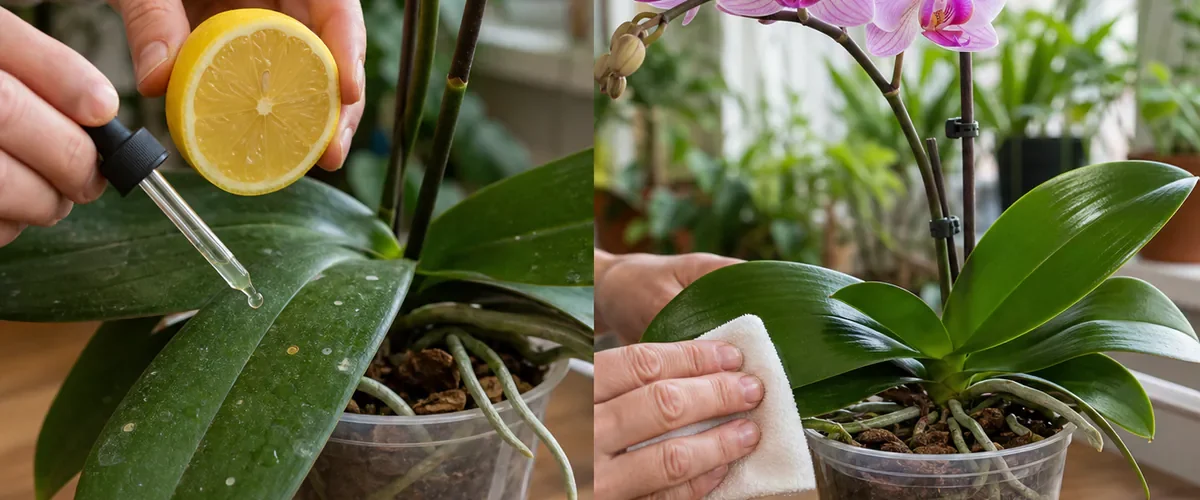
Lemon juice contains citric acid. In a highly diluted solution, acid can loosen some hard-water residue on a leaf surface. Removing a pale film may reveal the natural gloss underneath. That visual change does not mean the leaf has been fed.
Lemons contain small amounts of plant nutrients, but squeezing juice over orchid roots is not a balanced fertilizer program. The acidity is unpredictable, and pulp or sugar left on a plant may create sticky residue. A healthy leaf makes its own shine when clean and well hydrated.
Why the Hidden Cost Can Be Brown Spots
Undiluted juice can injure leaf cells. Sunlight and heat may make the damage worse, leaving pale or brown patches that do not heal. Liquid that runs into the crown can sit between leaves and encourage rot.
Orchid roots are also sensitive to sudden chemical changes. Repeated acidic watering may alter the root zone without solving the real reason a plant is not blooming. If your water quality is a concern, test it or ask a local orchid group for guidance rather than guessing with kitchen acids.
How to Clean Orchid Leaves Safely
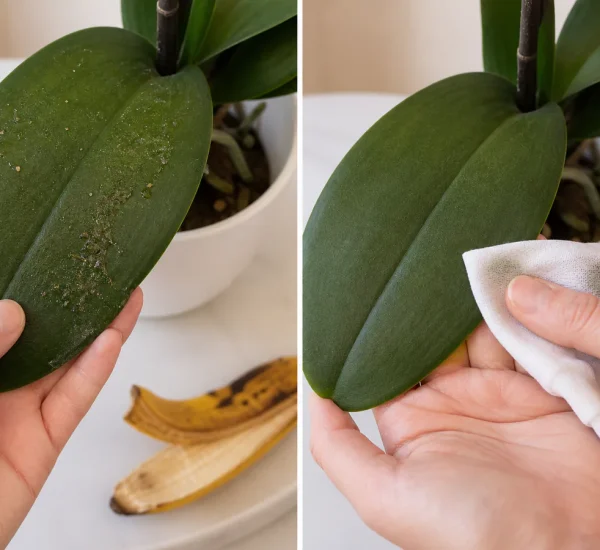
Support each leaf with one hand. Wipe the upper surface gently with a soft cloth dampened with clean lukewarm water. Use a fresh section of cloth for each plant so pests or disease are not spread through the collection.
Do not polish leaves with oil, mayonnaise, milk, or commercial shine products unless they are specifically labeled safe for that orchid. Coatings collect dust and may interfere with the leaf surface. Never scrub hard, and avoid wiping delicate new growth.
Dry any water that reaches the crown with the corner of a paper towel. Clean in the morning so stray moisture can evaporate before cooler night temperatures.
If You Still Want to Test Diluted Lemon
Plain water is enough for routine dust. For stubborn mineral residue, first identify the orchid and test one old leaf in an unnoticed area. Use only a very weak dilution, never straight juice, and wipe again with plain water. Keep the plant out of direct sun while you observe it.
Stop immediately if the surface changes color, feels tacky, or develops spots. Do not use lemon on damaged leaves, fresh cuts, roots, flowers, or the growing crown. Because water and lemon strength vary, there is no universal kitchen recipe that is risk-free for every orchid.
The Real Florist Formula for More Blooms
Give It Enough Filtered Light
A dark green Phalaenopsis that never reblooms may need more light. Move it gradually toward a bright east-facing window or filtered exposure. Protect it from hot midday rays that can scorch leaves.
Keep Roots Firm and Airy
Use orchid bark or a medium suited to the species. Water thoroughly, drain completely, and wait until roots and mix approach the correct dryness before watering again. Never leave the inner pot standing in water.
Feed With a Complete Orchid Fertilizer
Use a product that supplies major nutrients and micronutrients, following its label. Apply it to moist roots at the recommended interval. Heavy feeding creates salt buildup and root burn rather than a faster flower spike.
Respect the Bloom Cycle
Many common orchids flower seasonally. A healthy Phalaenopsis may respond to bright light and a modest difference between day and night temperature. Other orchid types have different rest and temperature needs, so identify the plant before changing care.
Mistakes That Hide Behind Shiny Leaves
A glossy leaf can still belong to a plant with rotten roots. Dust removal cannot correct soggy bark, a blocked drainage pot, or cold damage. Inspect roots through a clear pot and check for pests beneath leaves.
Do not add lemon, garlic water, coffee, and fertilizer together. When several variables change, you cannot tell what helped or harmed the orchid.
Let Healthy Leaves Shine on Their Own
The lemon trick creates an appealing before-and-after image, but the safest shine comes from removing dust with water. Flowers require stored energy, living roots, and the right seasonal signal.
Use acid only as a cautious spot test for mineral film, never as a miracle feed. Give the orchid bright filtered light and patient, measured care, and its leaves can become strong and naturally glossy without paying the hidden cost of a chemical burn.