A snake plant can stand quietly in the same corner for years, making only upright green leaves. Then a thin stalk rises from the center, covered in tiny buds that release a sweet fragrance after dark. The rare event feels sudden, but the first sign appears long before the room smells different.
A mature plant in bright light may produce a narrow flower spike. You cannot guarantee it, and stressing the plant severely is not worth the risk, but steady care can improve the chance.
The Rare Sign to Look For
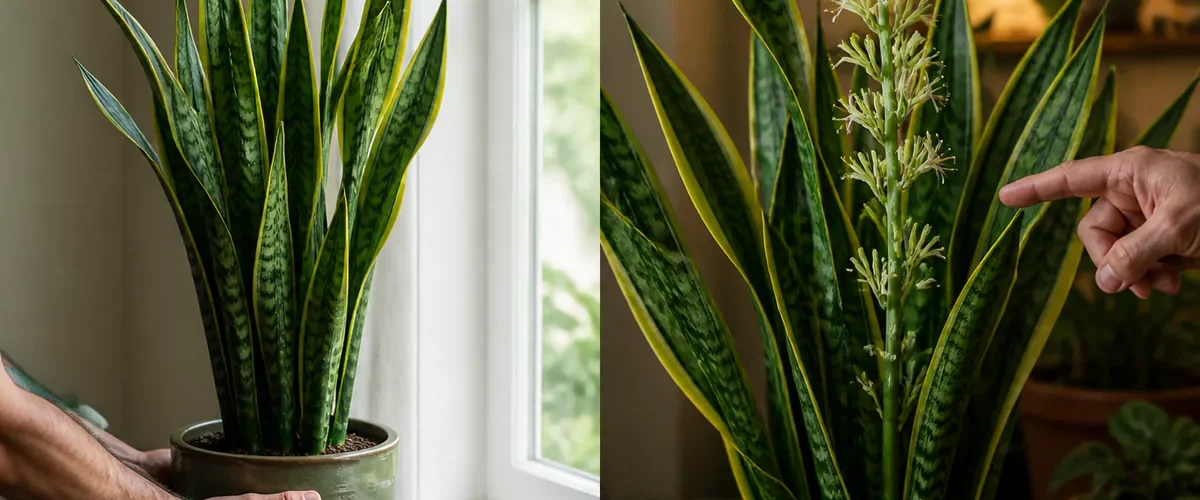
A flower stalk is thinner and rounder than a snake plant leaf. It rises on its own and develops clusters of small pale green or creamy buds. Depending on the plant now classified in the Dracaena group, the flowers may open in the evening and release a sweet scent.
The buds can produce sticky nectar. Protect furniture below and wipe spills with plain water. Keep children and pets from tasting flowers, leaves, or nectar; snake plants can cause problems if eaten.
Photograph the stalk every few days instead of touching it. The clusters enlarge slowly, and repeated handling can snap the thin stem before the flowers open.
Maturity Comes Before Flowers
Young divisions focus on leaves and rhizomes. A fuller established clump has more stored energy and is more likely to bloom. Some compact varieties rarely or never flower indoors, so plant genetics matter.
Do not expect a new nursery plant to bloom on schedule. The goal is a healthy mature plant, with flowering as an occasional bonus.
Increase Light Without Burning Leaves
Snake plants tolerate low light, but tolerance is not the same as strong growth. Place the pot near a bright window with filtered light or gentle direct morning sun. Move it gradually from a dark corner.
Hot midday sun through glass can scorch leaves. Watch for bleached patches and move the plant back if they appear. Rotate the pot occasionally during normal growth so leaves do not lean strongly, but stop moving it once a delicate flower stalk is developing.
Let the Mix Dry Between Waterings
Thick snake plant leaves store water. Soaked soil suffocates roots and rhizomes, causing yellow leaves and soft bases. Use a fast-draining container mix and a pot with open drainage holes.
Water deeply, let excess escape, and empty the saucer. Wait until the mix has dried well before watering again. The interval may be much longer in a cool dim winter room than on a bright warm summer porch.
A Snug Pot Is Fine; a Broken Pot Is Not
Snake plants often grow well while somewhat snug. Their strong rhizomes can eventually distort or crack a container. Repot before the pot fails or roots block drainage.
Choose a pot only one size larger and keep the plant at the same depth. A huge new container holds wet unused soil around the root ball, increasing rot risk.
Feed Lightly During Growth
Use a balanced houseplant fertilizer at the label rate during active growth. Snake plants do not need heavy feeding. Excess nitrogen may encourage soft leaves and salt buildup rather than flowers.
Do not bury banana peels, coffee grounds, or other scraps in the pot. Decomposing food attracts pests and makes moisture harder to judge.
Should You Stress a Snake Plant to Make It Bloom?
Flowering is sometimes associated with maturity, bright light, and mild root restriction or seasonal stress. This has led to advice to starve the plant of water or keep it painfully root-bound.
Do not deliberately damage roots, leave the plant wilted for long periods, or expose it to cold. Severe stress can cause permanent injury without producing a single bud. Healthy conditions with a normal dry interval are enough.
Care for the Flower Spike
Keep water off the buds and do not spray fragrance or leaf shine nearby. The stalk may lean, so add a loose support only if needed. Enjoy the evening scent with normal room ventilation.
After flowers fade, cut the dry stalk near its base with clean shears without nicking leaves. The plant will return to foliage growth. Flowering does not mean it is dying.
Common Reasons Flowers Never Appear
Very low light, a young plant, constant wet soil, cold damage, or an unsuitable variety can prevent blooming. Repotting and dividing too often also resets an established clump.
Correct the basics, then be patient. No fertilizer can force a flower spike from an immature plant overnight.
The Quiet Plant Has a Secret Evening
The rare bloom is special because it cannot be ordered. It arrives after the snake plant has built enough strength under useful light and restrained watering.
Watch the center for a slender stalk instead of another sword-shaped leaf. If buds line its sides, your familiar foliage plant is preparing its hidden performance: small pale flowers and a sweet nighttime fragrance that few owners ever get to experience.