A rotten orchid can look finished: leaves sag, roots turn brown, and the pot smells damp. At that moment, a viral one-spoonful rescue feels irresistible. Cinnamon, sugar, garlic water, or another kitchen ingredient is often presented as the miracle. Yet no spoonful can restore tissue that has already rotted.
The orchid’s real chance begins when the decay is removed and the surviving firm tissue can dry, breathe, and grow. The rescue is careful, not instant, but orchids can be remarkably persistent when even a few healthy roots or a solid crown remain.
First Decide Whether the Orchid Can Be Saved
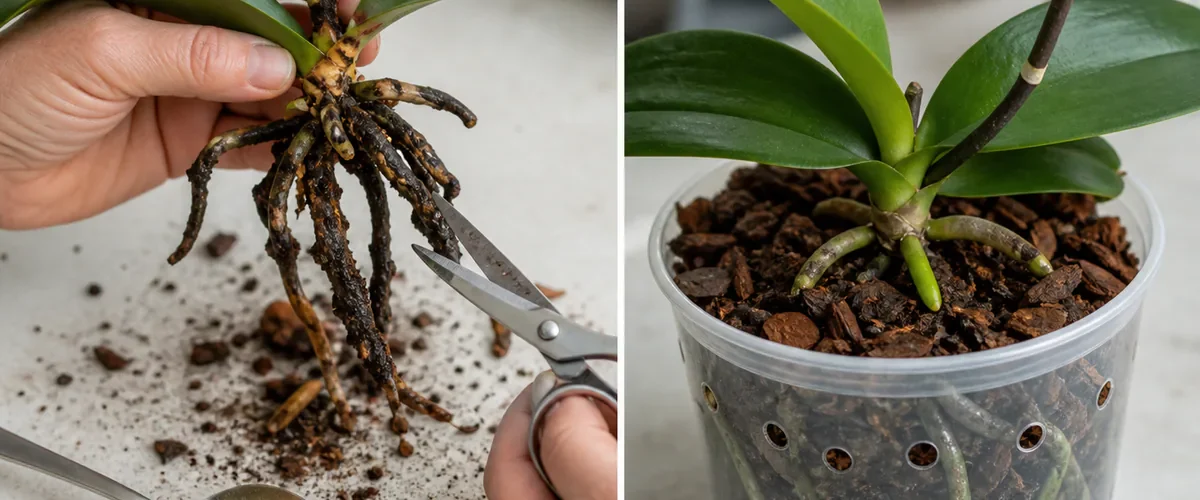
Take the inner pot out of its decorative cover. Smell the mix and look through the sides if the pot is clear. Healthy Phalaenopsis roots are firm. They may look green when wet and silvery when dry. Rotten roots are soft, hollow, dark, or slimy, and the outer layer may slide off when touched.
Check the crown where the leaves meet. A firm crown with at least one healthy leaf or root offers hope. If the entire crown and stem are black, mushy, and collapsing, recovery may not be possible. Keeping a fully decayed plant beside healthy orchids can also invite pests or disease.
Remove This Before Adding Anything
Prepare sharp scissors or pruning shears. Wash them, then disinfect them according to the tool maker’s directions. Work over a clean surface and keep the sick orchid away from other plants.
Slide the plant from the pot and remove the old bark or moss. Rinse gently only if needed to see the roots. Cut every soft, hollow root back to firm tissue. Do not cut healthy roots simply because they are yellow inside the pot; roots without light may be pale and still perfectly firm.
Remove dead leaf material that traps moisture, but never tear into the living crown. Disinfect the tool again if you move from diseased tissue to a clean cut.
What About the Famous Spoonful of Cinnamon?
Cinnamon is often praised because some of its compounds can slow certain fungi in laboratory settings. Kitchen cinnamon is not a complete orchid treatment, and a concentrated dusting can dry delicate living roots. It cannot reverse rot inside dead tissue.
If an experienced grower uses a tiny amount on a dry cut stem, it should stay away from healthy root tips. Soaking the entire plant in strong cinnamon water is unnecessary and may add stress. When a diagnosed disease needs treatment, use a product labeled for that plant and problem or ask a local orchid specialist.
Repot Into Air, Not Ordinary Soil
Discard the old medium. Clean the pot thoroughly or use a new one with generous drainage and ventilation. Choose fresh orchid bark or another mix suited to the orchid species and your climate. Ordinary potting soil stays too dense around most epiphytic orchids.
Select a pot just large enough for the surviving roots. An oversized pot holds wet material for too long. Set the plant so the crown remains above the mix, then settle bark around the roots without crushing them.
Watering After the Rescue
Follow species-specific advice and consider how much was cut. Avoid pouring water into the crown. When you water, soak the medium thoroughly and let it drain completely. Never leave the pot standing in water inside a decorative container.
Wait until the mix approaches dryness before watering again. A calendar cannot tell you when that happens. Warmth, airflow, pot size, root count, and season all change drying speed.
Create Recovery Conditions
Place the orchid in bright filtered light, not harsh midday sun. Keep it warm with gentle air movement. Normal moderate humidity can help, but sealing a wet, rotten plant in a closed bag may encourage more decay.
Do not fertilize a rootless or badly damaged orchid heavily. Fertilizer salts cannot be used well without functioning roots and may burn new tips. Wait for clear root growth, then use an orchid fertilizer at the label rate for a recovering plant.
Watch for These Signs
A rescue takes weeks or months. A firm crown, a new green root tip, or a slowly emerging leaf is better evidence than an old leaf that remains wrinkled. Do not keep unpotting the orchid to check it; repeated handling breaks new roots.
Continued blackening, a foul smell, or spreading soft tissue means decay is active. Isolate the plant and get help identifying bacterial versus fungal disease, because the treatments differ.
The Miracle Is the Tissue You Save
One spoonful makes a wonderful headline, but the decisive step is removal. Cut away rot, discard the collapsed medium, repot into air, and change the watering pattern that caused the problem.
The orchid will not spring back in one moment. If it has viable tissue, however, those quiet changes give it what no kitchen powder can provide: a clean stopping point for decay and room to build living roots again.